Texas Explained
The Brazos River Explained: The Texas Basin With the Biggest Flow
The Brazos crosses an enormous slice of Texas from the Rolling Plains to the Gulf. Its tributaries, reservoirs and changing water demands help explain farming, cities, floodplains and the state's surface-water map.
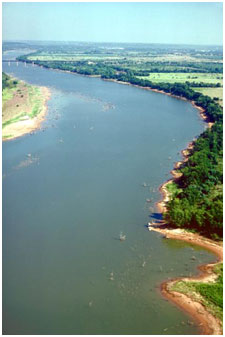
The Brazos is one of the rivers that makes Texas look simple on a map and complicated on the ground. It begins where the Salt Fork and Double Mountain Fork meet in Stonewall County, then runs across a huge cross-section of the state before reaching the Gulf of Mexico. Along the way, the basin ties together dry western headwaters, farm country, fast-growing cities, major reservoirs and broad lower-river floodplains.
Why the Brazos is such a big Texas river
The Texas Water Development Board identifies the Brazos as the second-largest river basin by area within Texas. The river itself is the state's third longest, and TWDB lists it as having the largest average annual flow volume of any Texas river. Those facts matter because length, drainage area and flow are three different ways to describe a river—and the Brazos is unusually important by all three.
The basin is not just the main stem. It includes the Salt, Double Mountain and Clear forks, along with the Little, Leon, Navasota, Paluxy, Nolan, Lampasas and other rivers and creeks. Rain falling far from the Brazos itself can still become Brazos water if it falls inside that watershed.
The upper basin and the groundwater connection
TWDB highlights a major pressure in the upper basin: increasing demand for surface water as groundwater supplies decline, particularly where the Ogallala Aquifer historically supplied much of the water. That is an important reminder that surface water and groundwater planning are not separate stories. When one source becomes less dependable, pressure can shift to another.
Reservoirs turned the Brazos into a managed water system
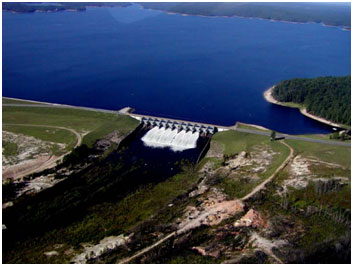
The Brazos basin contains a long list of reservoirs, including Possum Kingdom Lake, Lake Whitney, Lake Waco, Lake Granbury, Lake Somerville and many others. They do not make the river artificial, but they do change how water is stored, released and used. Flood control, municipal supply, recreation and downstream needs all become part of the basin's modern operating system.
That is why the Brazos is best understood as more than a scenic river corridor. The river connects infrastructure and communities across hundreds of miles. A reservoir in one part of the basin, a groundwater decline in another and urban demand somewhere downstream can all belong to the same statewide water story.
What changes as the river crosses Texas
- The western and upper basin is generally drier and more water-constrained than the lower basin.
- Tributaries expand the drainage network long before water reaches the lower Brazos.
- Reservoirs store water and alter the timing of downstream flows.
- Agriculture, towns and metropolitan growth create different kinds of demand in different reaches.
- The lower river eventually carries the basin's water toward the Gulf of Mexico.
Why the Brazos matters beyond the riverbank
The Brazos helps explain why Texas water policy follows basins rather than political boundaries. It also shows why a river's identity is not one landscape. The same basin can include High Plains water concerns, Central Texas reservoirs and humid lower-river country.
If you want to understand Texas as a connected physical system, the Brazos is one of the best examples. It takes water from a vast interior watershed and gathers tributaries, reservoirs, cities and farms into one route to the Gulf. The river is not just a line across Texas; it is an organizing system beneath a large part of the state.
Primary source: Texas Water Development Board ↗
Filed under
- Brazos River
- Brazos River basin
- Texas rivers
- Texas water
- Texas geography
- TWDB
From the magazine
More stories to read next
Lakes & Rivers
Toledo Bend Explained: Texas' Largest Reservoir and a Two-State Water Project
August 16, 2026 · About 9 minutes
Lakes & Rivers
Possum Kingdom Lake Explained: An Early Brazos River Multipurpose Reservoir
August 16, 2026 · About 9 minutes
Lakes & Rivers
Lake Whitney Explained: A Brazos River Reservoir Built for Multiple Jobs
August 16, 2026 · About 9 minutes