Texas Explained
Lake Whitney Explained: A Brazos River Reservoir Built for Multiple Jobs
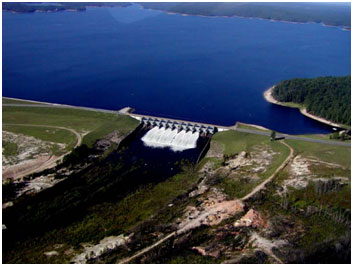
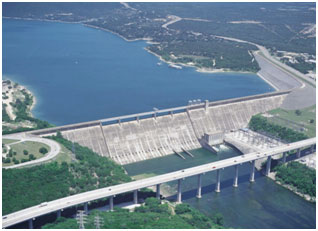
Lake Whitney was designed as a multipurpose federal project on the Brazos. Flood control, municipal supply, irrigation, hydropower and recreation all share one reservoir, making it a classic example of Texas' engineered river system.
Lake Whitney is a useful antidote to the idea that a Texas reservoir exists for one purpose. Built on the main stem of the Brazos River, Whitney was designed as a federal multipurpose project. Flood control, water supply, irrigation, recreation and power production all belong to the same dam-and-reservoir story.
Why the federal government built Whitney
TWDB traces the project to federal flood-control authorization before World War II. Funding was interrupted during the war, construction began in 1947 and the reservoir began deliberate impoundment in 1951. The U.S. Army Corps of Engineers operates the project.
One reservoir, several operating purposes
Flood control requires capacity to capture large inflows. Municipal supply and irrigation depend on stored conservation water. Hydropower depends on controlled releases through the project. Recreation uses the same water surface and shoreline. Those uses can reinforce one another, but they can also create different expectations about how a reservoir should behave.
Whitney belongs to the Brazos system
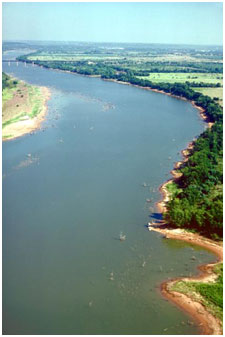
The dam sits directly on the Brazos rather than on a small tributary. TWDB records a drainage area above the dam of more than twenty-seven thousand square miles, with a substantial portion considered noncontributing. That drainage context helps explain why a reservoir's watershed is often far larger than the counties touching its shoreline.
Conservation pool and flood pool are different ideas
TWDB distinguishes the conservation pool from the higher flood-control pool. That distinction is basic reservoir literacy: the normal stored-water zone and the temporary flood-storage zone are not the same operational space.
When reservoir levels move, the meaning depends on which operating zone the water occupies, recent inflows and release decisions. A single percentage-full number can be useful, but it does not tell the whole operating story.
What Lake Whitney teaches
- Federal flood-control projects often serve water-supply and recreation roles too.
- A reservoir on a main-stem river receives water from a watershed far beyond its immediate shoreline.
- Conservation storage and flood storage are separate operating concepts.
- Power production, irrigation, municipal supply and recreation can all share one project.
- Reservoir behavior makes more sense when you start with purpose rather than shoreline appearance.
A classic multipurpose Texas reservoir
Whitney is not unusual because it has many uses; it is useful because those uses are unusually easy to see in one place. The lake shows how Texas turned a major river into managed storage without erasing the river beneath it.
Image credit: Texas Water Development Board reservoir record
Primary source: Texas Water Development Board ↗
Filed under
- Lake Whitney
- Brazos River
- Whitney Dam
- Texas reservoirs
- USACE
- Texas water
From the magazine
More stories to read next
Lakes & Rivers
Toledo Bend Explained: Texas' Largest Reservoir and a Two-State Water Project
August 16, 2026 · About 9 minutes
Lakes & Rivers
Possum Kingdom Lake Explained: An Early Brazos River Multipurpose Reservoir
August 16, 2026 · About 9 minutes
Lakes & Rivers
Lake Travis Explained: Austin's Flood-Control and Water-Storage Reservoir
August 16, 2026 · About 9 minutes