Texas Explained
The Trinity River Explained: The River System Behind Dallas-Fort Worth
The Trinity River basin is entirely inside Texas and sits beneath much of Dallas-Fort Worth's water story. Its forks, reservoirs and downstream exports connect a major metro area with the Gulf Coast.
For millions of North Texans, the Trinity River is easy to overlook because the basin is more visible as lakes, creeks, levees and urban greenways than as one dramatic river canyon. Hydrologically, though, the Trinity is one of the most important river systems in the state.
The largest basin entirely inside Texas
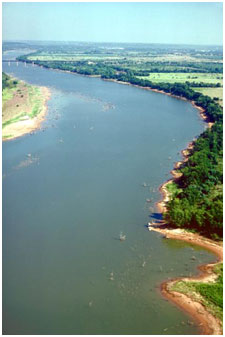
TWDB describes the Trinity Basin as the largest river basin whose watershed area lies entirely within Texas. The main river forms near Dallas where the Elm and West forks come together, then flows southeast toward Trinity Bay and the Gulf of Mexico.
The basin also includes the Clear, East, Elm and West forks plus Cedar, Chambers and Richland creeks. In a heavily urbanized region, those tributaries and forks are part of the same watershed even when they look like separate local waterways.
Dallas-Fort Worth sits in the upper basin
TWDB specifically identifies the Dallas-Fort Worth metropolitan area as a major upper-basin demand center. That makes the Trinity a useful example of an urban river system where water supply cannot be understood by looking at the river channel alone. Reservoirs distributed around North Texas are a central part of how the region stores and manages water.
A network of reservoirs supports the metro area
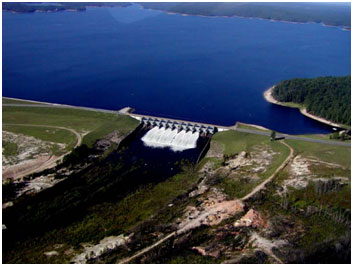
TWDB lists reservoirs such as Lewisville Lake, Grapevine Lake, Ray Roberts Lake, Lake Bridgeport, Eagle Mountain Lake, Lake Worth, Cedar Creek Reservoir, Richland-Chambers Reservoir and Lake Livingston within the basin. Different reservoirs serve different combinations of supply, flood-control and recreational purposes, but together they show how engineered storage became inseparable from the natural watershed.
The basin connects DFW to Houston-area demand
The Trinity is not only a North Texas water story. TWDB notes that water from the lower basin is exported to the Houston area. Increasing demand in both metropolitan regions makes balancing human needs and environmental requirements an important basin issue.
That connection is easy to miss on a road map. Dallas-Fort Worth and Houston feel like separate urban systems, but statewide water infrastructure can link their needs through the same river basin.
Why the river can feel less obvious than the basin
In many places, people interact with the Trinity system through reservoirs, tributaries, parks or flood-control corridors rather than the main stem. That does not make the river less important. It means the functional watershed is broader than the landscape most residents see day to day.
What the Trinity teaches
- A major river basin can be heavily urban even when the river itself is not the region's dominant visual landmark.
- Forks and tributaries make local creeks part of a much larger watershed.
- Reservoir networks are fundamental to metropolitan water supply.
- Water can be moved between demand centers, so a basin can serve people far from the main river.
- Rapid growth makes water-supply planning and environmental-flow questions increasingly connected.
The hidden water map under North Texas
The Trinity explains why North Texas water is a regional system rather than a city-by-city system. Lakes that look independent on a recreation map, creeks that feel local and the river corridor through Dallas all belong to one basin that continues to the Gulf. Understanding that network makes the water infrastructure of Dallas-Fort Worth far easier to read.
Primary source: Texas Water Development Board ↗
Filed under
- Trinity River
- Trinity River basin
- Dallas Fort Worth water
- Texas rivers
- Texas reservoirs
- TWDB
From the magazine
More stories to read next
Lakes & Rivers
Toledo Bend Explained: Texas' Largest Reservoir and a Two-State Water Project
August 16, 2026 · About 9 minutes
Lakes & Rivers
Possum Kingdom Lake Explained: An Early Brazos River Multipurpose Reservoir
August 16, 2026 · About 9 minutes
Lakes & Rivers
Lake Whitney Explained: A Brazos River Reservoir Built for Multiple Jobs
August 16, 2026 · About 9 minutes