Texas Explained
Lake Buchanan Explained: The Upper Anchor of the Highland Lakes
Lake Buchanan is more than a Hill Country lake. Built on the Colorado River and operated with downstream reservoirs as a system, it helps explain how Central Texas stores water, manages floods and produces hydropower.
Lake Buchanan sits high in the chain of reservoirs Texans know as the Highland Lakes. On a recreation map it looks like one large Hill Country lake. On a water-system map, it is a major storage reservoir on the Colorado River whose releases and storage interact with lakes farther downstream.
Why Buchanan exists
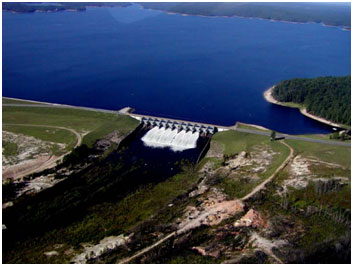
TWDB says Lake Buchanan and Buchanan Dam are owned and operated by the Lower Colorado River Authority together with downstream lakes as a system. Their purposes include flood control, water supply, hydropower generation and recreation. That combination is the central idea behind many Texas reservoirs: one dam is expected to do several jobs at once.
The reservoir helped create the LCRA era
The dam's history is closely tied to the creation of the Lower Colorado River Authority. Construction began under a private utility project in 1931, stalled after the company failed, and later resumed under the new public authority. LCRA reconstruction began in 1935, deliberate impoundment began in 1937 and the dam was completed in 1938.
That history matters because Lake Buchanan was not simply a local lake-development project. It became part of a public river-management system designed to store and sell water, generate electricity and reduce flood damage along the lower Colorado.
Why upstream storage matters downstream
A large upstream reservoir changes what can happen farther down the river. Water stored at Buchanan can be managed in coordination with other reservoirs rather than arriving downstream only according to the timing of storms. TWDB describes Lake Travis runoff as partly regulated by Lake Buchanan and other upstream reservoirs, which makes the connection between the lakes explicit.
Storage is not the same thing as a fixed amount of water
TWDB's reservoir record reports a surveyed conservation storage capacity and also notes that Buchanan is operated at seasonal normal-pool levels. The larger lesson is that reservoir capacity is an engineered volume, while the water actually present changes with inflow, releases, evaporation and operations.
What Lake Buchanan teaches about the Highland Lakes
- The Highland Lakes are a connected Colorado River system, not a set of unrelated lakes.
- A reservoir can combine water supply, flood management, hydropower and recreation.
- Upstream storage affects the timing and management of water downstream.
- Public river authorities became central to the way Texas manages major reservoir systems.
- A lake's recreational identity can hide a much larger infrastructure role.
The best way to read Buchanan
Think of Lake Buchanan as an upper storage node in the lower Colorado system. Its beaches, coves and Hill Country setting are real, but so are the less-visible links to downstream reservoirs, municipal supply, flood operations and power generation. That systems view is what turns a lake on the map into an explanation of Central Texas water.
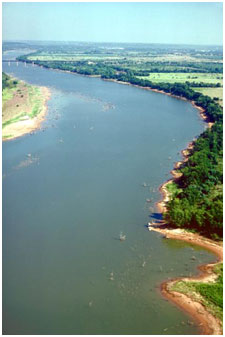
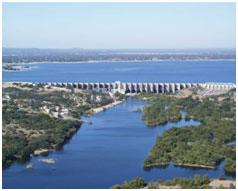
Image credit: Texas Water Development Board reservoir record
Primary source: Texas Water Development Board ↗
Filed under
- Lake Buchanan
- Highland Lakes
- Colorado River
- LCRA
- Texas reservoirs
- Texas water
From the magazine
More stories to read next
Lakes & Rivers
Toledo Bend Explained: Texas' Largest Reservoir and a Two-State Water Project
August 16, 2026 · About 9 minutes
Lakes & Rivers
Possum Kingdom Lake Explained: An Early Brazos River Multipurpose Reservoir
August 16, 2026 · About 9 minutes
Lakes & Rivers
Lake Whitney Explained: A Brazos River Reservoir Built for Multiple Jobs
August 16, 2026 · About 9 minutes