texas history
Texas Military History: From the Revolution to the World Wars
A chronological guide to the battles, frontier posts, state forces, naval history, border mobilizations and global wars that shaped Texas from 1835 into the modern era.
Texas military history does not begin with a modern base or end with the Alamo. It stretches from colonial militias and the Texas Revolution through the armed forces of an independent republic, the U.S.–Mexican War, a chain of frontier posts, the Civil War, border mobilizations, two world wars and the long military presence that still shapes places such as San Antonio, Killeen, El Paso, Wichita Falls, Abilene and Corpus Christi.
The most useful way to understand that history is chronologically. Each era changed the institutions involved. Volunteer companies became a revolutionary army. The Republic created its own War Department, army and navy. State militia and Rangers operated beside federal troops after annexation. The National Guard emerged from later militia reforms. At the same time, Texas became a training ground, logistics corridor, aviation center, naval home and source of service members for conflicts far beyond the state.
1835–1836: the Texas Revolution turns militias into an army
On October 2, 1835, the Battle of Gonzales opened the armed phase of the Texas Revolution. The dispute over a small cannon produced the enduring “Come and Take It” symbol, but the larger significance was organizational: local volunteers were becoming a revolutionary military force while political leaders debated what they were fighting for.
The crisis accelerated through the winter. The siege of the Alamo began on February 23, 1836, and ended with the Mexican assault on March 6. Four days earlier, on March 2, delegates meeting at Washington-on-the-Brazos had adopted the Texas Declaration of Independence. Military and political events were unfolding at the same time, often with poor communication between communities separated by difficult roads and long distances.
After the Alamo and the Goliad campaign, Sam Houston withdrew eastward while building and preserving the Texian army. On April 21, 1836, his force attacked Antonio López de Santa Anna's army at San Jacinto. The short, decisive battle changed the military situation and secured the independence the convention had declared seven weeks earlier.
1836–1846: the Republic of Texas builds its own armed forces
Independence did not eliminate military pressure. On August 5, 1836, the Republic established a War Department responsible for the new nation's military affairs. The department's early structure included the adjutant general, militia, army, navy and Rangers. Those institutions had to defend a republic with a long frontier, a disputed relationship with Mexico, limited money and enormous transportation problems.
The Republic's military history included far more than the aftermath of San Jacinto. Texas forces fought and patrolled along the frontier, undertook expeditions into contested territory and operated a navy in the Gulf. Naval actions such as the Battle of Campeche and land operations such as the Santa Fe Expedition show how ambitious—and financially strained—the Republic could be.
This is also the era in which the Texas Rangers evolved from locally organized frontier companies into a more recognizable arm of state power. Their history is complicated by the same border and frontier conflicts that shaped the Republic, including warfare involving Comanche and other Native nations, Mexican forces, settlers and rival political authorities.
1845–1848: statehood and the U.S.–Mexican War
Texas entered the United States on December 29, 1845. The transition from republic to state did not happen in a single instant: the Republic's government formally transferred authority to the new state government on February 19, 1846, and its army and navy were integrated into the United States military system.
Almost immediately, the disputed Texas–Mexico boundary became part of a larger war. U.S. and Mexican forces clashed near the lower Rio Grande in spring 1846. The battles of Palo Alto on May 8 and Resaca de la Palma on May 9 were the first two major battles of the U.S.–Mexican War, fought before Washington's formal declaration of war reached the battlefield.
Texas Rangers served prominently as scouts and irregular fighters during the conflict. Their mobility and knowledge of the region made them useful to U.S. commanders, while their reputation among Mexican civilians and soldiers also reflected the violence and irregular character of border warfare. The war permanently expanded the United States far beyond Texas and deepened the military importance of the Rio Grande corridor.
1850s: the frontier fort system moves west
After the war, federal military attention shifted toward the long inland frontier. The Army established and expanded posts in a moving line from Central Texas toward the Trans-Pecos. Forts were not simply defensive walls. They were supply depots, road anchors, payroll centers and military communities connected by wagon routes over enormous distances.
One of the most famous units assigned to the state was the 2nd U.S. Cavalry. Organized in 1855 specifically for frontier service, the regiment crossed the Red River into Texas in December of that year and established headquarters at Fort Mason in January 1856. Its officer corps included men who would later fight on opposing sides of the Civil War, including Albert Sidney Johnston, Robert E. Lee, George H. Thomas, Edmund Kirby Smith and John Bell Hood.
The surviving fort landscapes help make this period understandable. Fort Martin Scott near Fredericksburg represents an earlier line of posts. Fort McKavett and Fort Griffin show the later push west and north. Fort Lancaster guarded the road toward El Paso. Their histories include soldiers, civilian contractors, emigrants, stage traffic, ranching communities, Buffalo Soldiers and conflicts with Native nations whose homelands were being invaded and transformed.
1861–1865: Texas in the Civil War
Texas secession unfolded over several dates rather than one. A convention adopted the Ordinance of Secession on February 1, 1861; voters ratified it on February 23; and Texas was accepted into the Confederacy on March 1. The convention then accepted Confederate statehood in early March. Governor Sam Houston opposed secession and refused the required loyalty oath, ending his final term in office.
Texas was geographically distant from the war's largest eastern armies, but it was not outside the conflict. Confederate and state forces fought to protect the Gulf Coast and the Rio Grande trade corridor, while thousands of Texans served in campaigns elsewhere. The Battle of Galveston on January 1, 1863 restored Confederate control of the island port. At Sabine Pass on September 8, 1863, a small Confederate garrison stopped a much larger Union invasion attempt at the Texas–Louisiana border.
The Rio Grande remained strategically important because trade could move through neutral Mexico even under the Union blockade. That geography helps explain why fighting continued at the southern tip of Texas after the war had effectively ended elsewhere. The Battle of Palmito Ranch, fought May 12–13, 1865 east of Brownsville, became the final land battle of the Civil War, more than a month after Robert E. Lee surrendered in Virginia.
June 19, 1865: military occupation and emancipation in Texas
The end of Confederate military resistance did not mean freedom was immediately enforced everywhere in Texas. On June 19, 1865, Union Major General Gordon Granger issued General Orders No. 3 in Galveston, announcing that enslaved people in Texas were free and that the federal government would enforce emancipation. The date became Juneteenth, first commemorated by Black Texans and eventually recognized as a national holiday.
Juneteenth belongs in a military timeline because federal troops were essential to enforcing emancipation after Confederate defeat, but its meaning is larger than military history. It is a history of freedom, citizenship, family, community memory and the unfinished Reconstruction that followed the war.
1898–1917: from state militia to National Guard and border mobilization
The late nineteenth and early twentieth centuries transformed Texas military institutions. Volunteer and militia organizations served during the Spanish–American War, while federal reforms gradually standardized state forces into the modern National Guard system. Camp Mabry in Austin became a central Texas Guard installation and remains one of the best places to study that institutional evolution.
San Antonio became increasingly important to the regular Army. In 1911, political instability in Mexico prompted the United States to assemble roughly 13,000 troops in a Maneuver Division near San Antonio, the Army's first attempt in years to concentrate a modern division-sized force. The mobilization exposed logistical and organizational problems but also strengthened San Antonio's position as a military center.
The border crisis intensified after Pancho Villa's 1916 raid on Columbus, New Mexico. Texas National Guard units were mobilized for border service while General John J. Pershing led the Punitive Expedition into Mexico. The long months of patrols, camps and field training gave Guard units practical experience just before the United States entered World War I.
1917–1918: World War I expands the Texas military landscape
World War I accelerated the construction of camps, airfields and training grounds. The Texas and Oklahoma National Guards helped form the 36th Division, which trained at Camp Bowie in Fort Worth before deploying to France. Other installations trained infantry, artillery, aviators and support troops while Texas railroads and cities absorbed the movement of soldiers on a scale few communities had experienced before.
The war also reinforced Texas' relationship with military aviation. San Antonio's early aviation experiments and expanding fields helped establish a pattern that would grow dramatically during the next world war: Texas offered open land, favorable flying weather and room for large training complexes.
1941–1945: Texas becomes a vast World War II training ground
World War II transformed military Texas. The state hosted major Army camps, airfields, naval facilities, aircraft plants and prisoner-of-war camps. More than a million military personnel trained in Texas during the war years, while Texans served in every major theater. The scale of the mobilization changed local economies, roads, housing and demographics as military installations expanded around cities and rural communities.
Texas also produced leaders whose wartime careers became nationally significant. Fredericksburg-born Chester W. Nimitz commanded U.S. naval forces across the Pacific. Dwight D. Eisenhower, born in Denison, became Supreme Commander of the Allied Expeditionary Force in Europe. Their Texas birthplaces are only part of the story, but they give visitors a local doorway into global strategy.
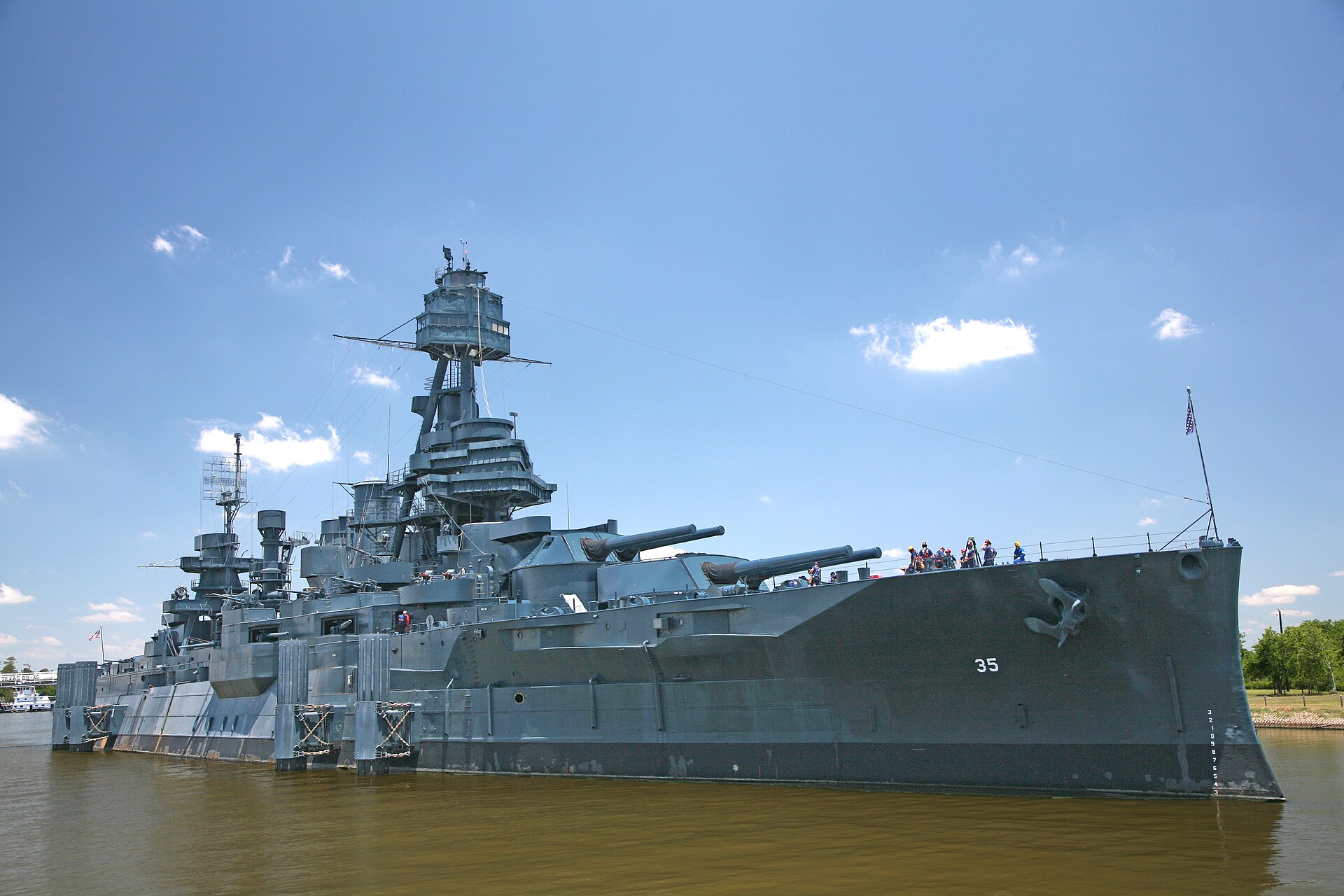
Battleship Texas provides a different link. Commissioned in 1914, the dreadnought served with the British Grand Fleet during World War I and later supported Allied amphibious operations in World War II, including North Africa, Normandy, Iwo Jima and Okinawa. Preserved after the war, the ship is now undergoing restoration in Galveston for a future museum berth.
Korea, Vietnam and the Cold War
The postwar era kept Texas deeply tied to the armed forces. Large installations trained and deployed personnel during the Korean War and Vietnam War, while the growth of strategic aviation, air defense, medical training and armored forces embedded the military more deeply in the state's metropolitan areas and smaller base communities.
Texas-born and Texas-connected officers continued to hold senior commands. General Walton H. Walker, born in Belton, commanded the U.S. Eighth Army during the difficult opening months of the Korean War. In the Vietnam era, Texas bases trained aircrews, soldiers, medics and support personnel while communities across the state experienced the political and human consequences of a long overseas conflict.
The military map Texans can still visit
The strongest way to experience this history is not to chase every base. It is to choose preserved places that represent different military systems and eras. The Alamo and San Jacinto explain the Revolution. Palo Alto places statehood inside the opening of the U.S.–Mexican War. Frontier forts show the Army's westward logistics network. Sabine Pass and Palmito Ranch preserve Civil War landscapes. Camp Mabry interprets state military forces. Fredericksburg and Harlingen preserve World War II memory. Battleship Texas makes naval history physically tangible.
- Texas Revolution: Gonzales, the Alamo, Goliad and San Jacinto.
- Republic forces: Washington-on-the-Brazos, Republic museums and Texas Navy history along the Gulf.
- U.S.–Mexican War: Palo Alto and Resaca de la Palma near Brownsville.
- Frontier Army: Fort Martin Scott, Fort McKavett, Fort Griffin, Fort Lancaster and Fort Davis.
- Civil War: Galveston, Sabine Pass, the Rio Grande corridor and Palmito Ranch.
- State forces: Camp Mabry and the Texas Military Forces Museum in Austin.
- World Wars: Battleship Texas, National Museum of the Pacific War, Eisenhower Birthplace and the Iwo Jima monument in Harlingen.
Why military history matters to the larger Texas story
Military history can become a list of battles and commanders if it is separated from everything around it. Texas makes more sense when the military story is connected to transportation, migration, Native history, slavery and emancipation, industrial growth, aviation, ports, borderlands and the rise of major cities.
The forts explain roads and settlement. The Civil War explains the economic importance of Gulf ports and the Rio Grande. World War II explains why some Texas cities grew around aviation and training installations. Juneteenth shows why the movement of armies mattered to the enforcement of freedom. Battleship Texas connects state identity to national naval history. Read together, those pieces turn military history from a narrow specialty into one of the major frameworks for understanding how Texas changed over two centuries.
Image credit: Daniel Schwen · CC BY-SA 4.0 · Wikimedia Commons
Primary source: Texas Military Department ↗
Filed under
- texas military history
- texas revolution
- republic of texas army
- texas frontier forts
- texas civil war
- texas national guard
- texas world war ii
- battleship texas
Plan the trip
Places connected to this story
Destinations explicitly tied to this article in the Texas Defined guide.
San Antonio · Bexar County
The Alamo
San Antonio's best-known historic landmark: the former Mission San Antonio de Valero, where more than three centuries of mission, military, revolutionary and preservation history converge in the heart of downtown.
Best season: Fall through spring for comfortable downtown walking; in summer, visit near opening for cooler temperatures and lighter crowdsUpdated Aug 2026- Historic Alamo Church and Long Barrack
- Alamo Exhibit and the Ralston Family Collections Center
- Living History demonstrations and interpretation of the mission and 1836 battle
Fredericksburg · Gillespie County
Fort Martin Scott State Historic Site
Fort Martin Scott was established in 1848 and became an early U.S. Army post on the expanding Texas frontier. Its Fredericksburg location makes it easy to connect German immigration, federal military expansion and Hill Country settlement in a single day.
Best season: Year-round; spring and fall are usually the most comfortable for outdoor portions of a visit.Updated Aug 2026- frontier forts
- Fredericksburg
- German Texas
Albany · Shackelford County
Fort Griffin State Historic Site
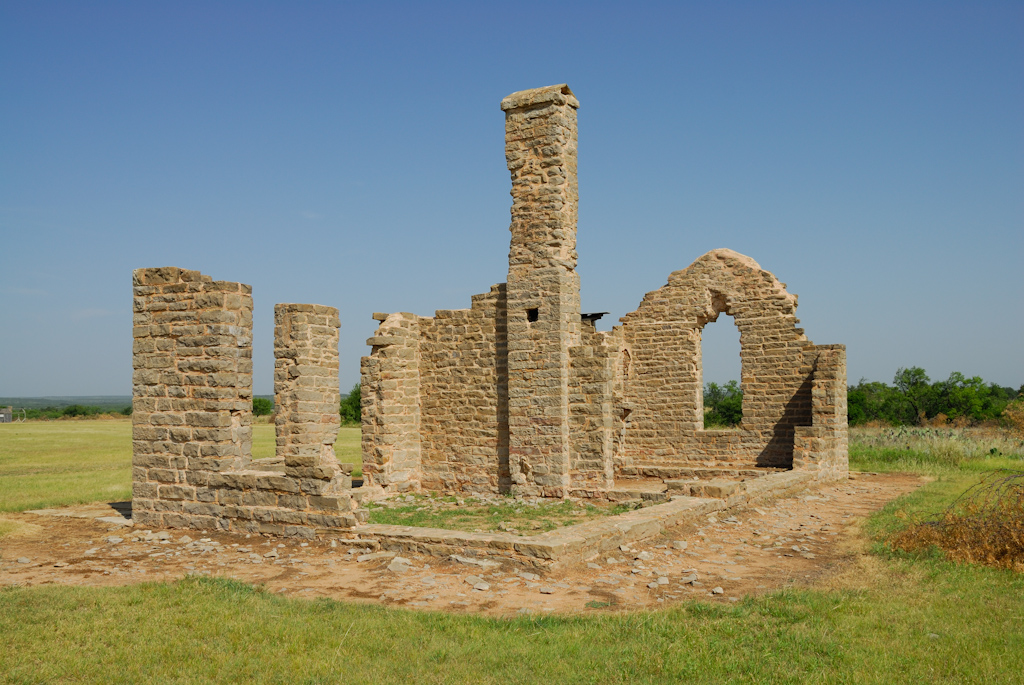
Fort Griffin operated from 1867 to 1881 as part of the U.S. Army's network of frontier posts on the Southern Plains. Ruins, military history and the surrounding ranch landscape make this one of the strongest places to connect frontier expansion with the cattle era.
Best season: Year-round; spring and fall are usually the most comfortable for outdoor portions of a visit.Updated Aug 2026- frontier forts
- Indian Wars era
- cattle trails
Fort McKavett · Menard County
Fort McKavett State Historic Site
The remarkably preserved West Texas post interprets U.S. Army life and conflict on the 19th-century frontier, including the service of Buffalo Soldiers. Its surviving buildings and remote setting create one of Texas' clearest physical impressions of an Indian Wars-era military post.
Best season: Year-round; spring and fall are usually the most comfortable for outdoor portions of a visit.Updated Aug 2026- Buffalo Soldiers
- frontier forts
- military history
Sheffield · Crockett County
Fort Lancaster State Historic Site
Established in 1855, Fort Lancaster protected a strategic overland route linking San Antonio and El Paso across West Texas. The isolated ruins make the scale, distance and logistical difficulty of 19th-century travel across the Edwards Plateau immediately understandable.
Best season: Year-round; spring and fall are usually the most comfortable for outdoor portions of a visit.Updated Aug 2026- frontier forts
- San Antonio-El Paso road
- West Texas
Sabine Pass · Jefferson County
Sabine Pass Battleground State Historic Site
The site marks the 1863 Civil War battle in which a small Confederate force stopped a much larger Union operation near the mouth of the Sabine River. Its Gulf Coast setting helps explain the strategic importance of ports, waterways and access to Texas during the Civil War.
Best season: Year-round; spring and fall are usually the most comfortable for outdoor portions of a visit.Updated Aug 2026- Civil War
- Gulf Coast
- military history
.jpg%3Fwidth%3D1600)



From the magazine
More stories to read next
Then & Now
Texas National Cemeteries: Fort Sam Houston, Houston and Dallas–Fort Worth
August 21, 2026 · About 12 minutes
Then & Now
Texas Military Museums & Historic Sites: The Best Places to See the Story in Person
August 20, 2026 · About 19 minutes

.jpg%3Fwidth%3D1600)