
texas history
Texas Revolution Road Trip: Where Independence Happened
Follow the Texas Revolution through the places where colonists organized, delegates declared independence, armies surrendered and the campaign ended at San Jacinto.
The easiest way to flatten the Texas Revolution is to reduce it to three names: the Alamo, Goliad and San Jacinto. Those places matter enormously, but the larger story becomes clearer when you travel through the political and settlement landscape that existed before the fighting, then follow the campaign in chronological order.
This route does that. It begins at San Felipe de Austin, moves to Washington-on-the-Brazos, turns south toward the Goliad campaign, and finishes at San Jacinto. A longer version adds the Republic-era political sites around West Columbia after independence. The result is less a checklist of monuments than a road trip through the changing geography of Texas in 1835 and 1836.
How to use this route
Do not try to compress every stop into one day. The core route crosses a large piece of southeast Texas, and several locations deserve enough time to walk the grounds rather than photograph a marker from the car. Two days is possible for a fast trip; three days gives the political sites, Goliad and San Jacinto room to make sense.
- Day 1: San Felipe de Austin, Washington-on-the-Brazos, Star of the Republic Museum and Barrington Living History Farm.
- Day 2: Fannin Battleground and Presidio La Bahía, with the Goliad mission landscape as the regional base.
- Day 3: San Jacinto Battleground and Monument, with optional Houston-area additions.
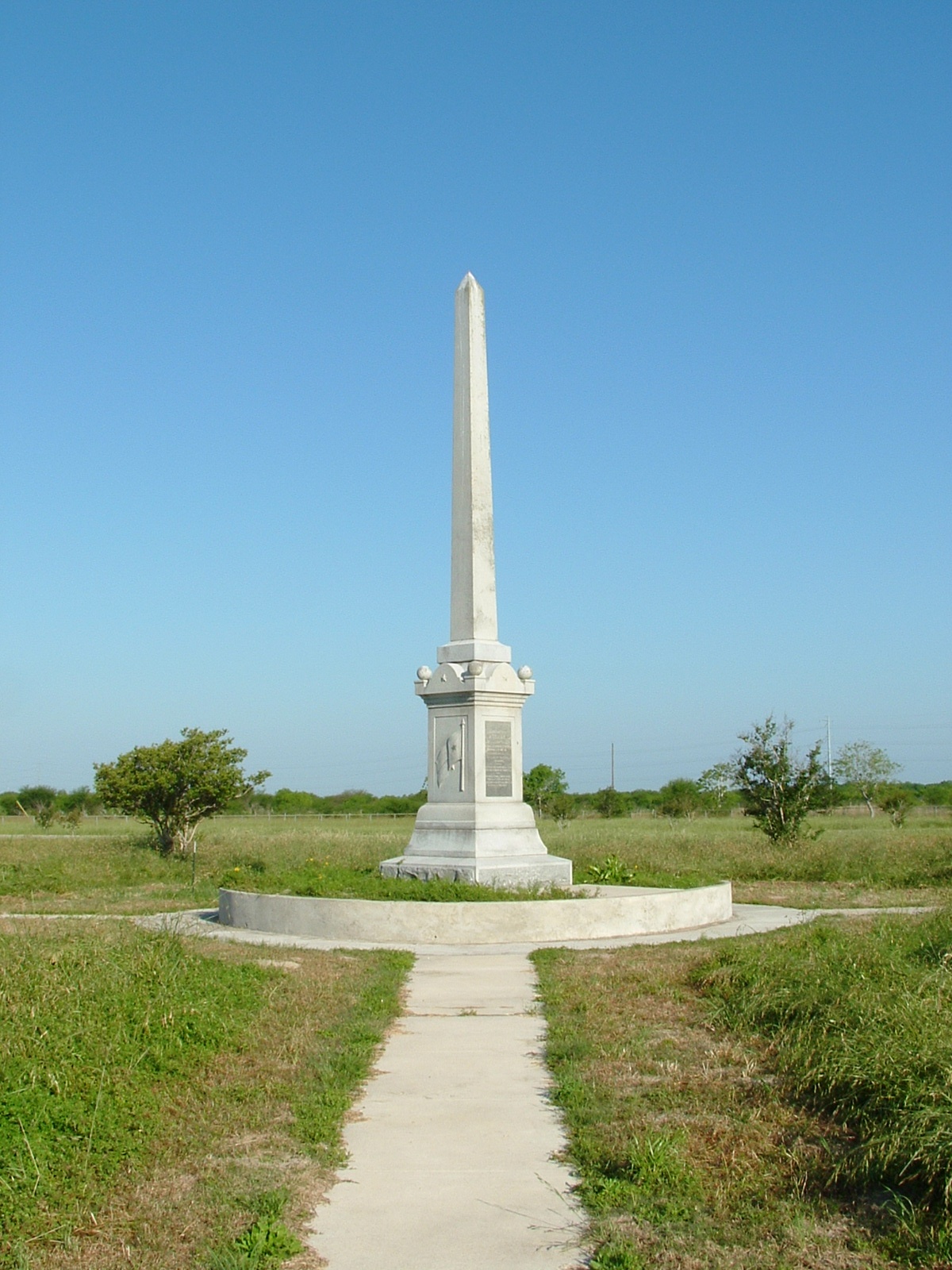
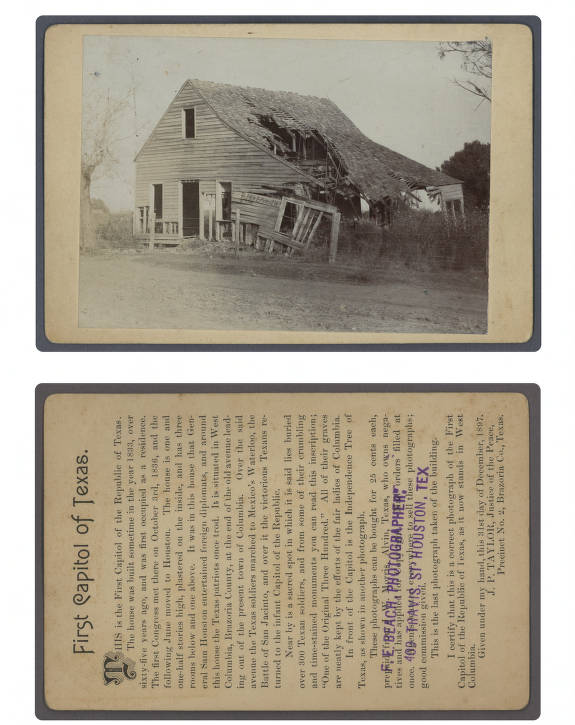
- Extension: First Capitol of Texas and Stephen F. Austin Memorial around West Columbia for the first months of the Republic.
Stop 1: San Felipe de Austin — understand the colony before the revolution
San Felipe de Austin is the right starting point because the Revolution did not begin in an empty landscape. Stephen F. Austin's colonial headquarters grew into an administrative and commercial center for Anglo-American settlement under Mexican rule. Land business, politics, newspapers and travel all ran through the community.
That context matters. Before visitors encounter armies and battlefields, San Felipe explains what settlers were building, how colonial government worked and why political disputes with Mexico became consequential. The Brazos River is part of the interpretation too. Early Texas communities were connected by ferries, roads and river corridors long before modern highways made the distances feel routine.
Spend enough time here to understand the townsite rather than looking only for one surviving building. The value of San Felipe is the reconstructed geography: streets, river access, interpretation and the sense that this was once one of the most important political places in Mexican Texas.
Stop 2: Washington-on-the-Brazos — independence becomes a government
From San Felipe, the route moves north to Washington-on-the-Brazos. Here delegates met in March 1836 and adopted the Texas Declaration of Independence while the military situation elsewhere was deteriorating rapidly. The site is powerful precisely because the landscape does not look like a grand national capital. A political break with Mexico happened in a small river settlement.
Treat the complex as three connected experiences. The convention-site landscape explains the political moment. The Star of the Republic Museum supplies artifacts and broader Republic context. Barrington Living History Farm shifts the scale from constitutions and armies to work, agriculture and household life in the Republic era.
Together they answer a question that battlefields cannot: what kind of society did the new republic expect to become? That makes Washington-on-the-Brazos more useful when visited before Goliad and San Jacinto rather than as an isolated patriotic stop.
Stop 3: Fannin Battleground — read the terrain first
The next leg turns south toward the Goliad campaign. Fannin Battleground preserves the Coleto battlefield where James Fannin's command was surrounded in March 1836. The open terrain is the key artifact. Walking the site makes it easier to understand the vulnerability of a column trying to move through exposed country and the tactical problem created once Mexican forces closed around it.
This is a place where sequence matters. Visit the battlefield before Presidio La Bahía. The surrender at Coleto leads directly into the events remembered at Goliad, and the short regional drive between the sites gives the story a physical scale that a textbook cannot.
Stop 4: Presidio La Bahía — several centuries in one place
Presidio La Bahía should not be reduced to one episode in 1836. Its Spanish colonial origins, relationship with nearby Mission Espíritu Santo, Mexican-era military role and Texas Revolution history overlap in the same landscape. That longer timeline makes Goliad one of the strongest places in Texas for seeing how Spanish, Mexican and Texian histories sit on top of one another rather than replacing each other cleanly.
For the Revolution route, the presidio is the essential companion to Fannin Battleground. It is where the Goliad campaign becomes a story about prisoners, military decisions and memory. Give the site time. The walls, chapel and surrounding landscape work better when visitors know what happened at Coleto before arriving.
Stop 5: San Jacinto Battleground — the campaign ends in an industrial landscape
San Jacinto is the natural climax of the route. On April 21, 1836, Sam Houston's Texian army attacked Santa Anna's force near the confluence of Buffalo Bayou and the San Jacinto River. The victory changed the military situation in a matter of minutes and became the decisive battle of the Revolution.
The modern setting creates an unusual historical experience. The battlefield survives beside the Houston Ship Channel and one of the most heavily industrialized landscapes in the state. Instead of treating that contrast as a distraction, use it. The juxtaposition shows how dramatically the geography around a nationally important battlefield can change while the protected core remains readable.
Start with the museum and monument, then walk or drive the battlefield with a map. The objective is not just to stand near the monument; it is to understand where the armies were positioned, how the attack unfolded and why the surrounding marsh, bayou and prairie mattered.
The Republic extension: West Columbia and Stephen F. Austin's final chapter
If the trip continues beyond the Revolution itself, turn south toward West Columbia. The First Capitol of Texas marks the community where the Republic's first Congress met. Nearby, the Stephen F. Austin Memorial marks the place associated with the home where Austin died in December 1836.
These are quieter sites, but that is their strength. San Jacinto can feel like a dramatic ending; West Columbia shows that independence immediately created a different problem—building a functioning government, establishing institutions and deciding what the new Republic of Texas would be.
What this road trip changes about the story
Traveling the sites in order reveals that the Revolution was simultaneously a settlement story, a political rupture, a military campaign and the beginning of a new government. San Felipe provides the colonial framework. Washington turns political opposition into independence. Goliad shows the campaign at its most costly. San Jacinto changes the military outcome. West Columbia begins the administrative work that followed.
That sequence is more useful than collecting famous names because it connects events to geography. Rivers, roads, settlements and distances shaped what people could know, where armies could move and why certain small communities became nationally important for a few critical months.
Planning notes
- Check each site's official page before departure for current hours, closures and special programs.
- Build extra time into the Goliad portion; Fannin Battleground, Presidio La Bahía and the mission landscape work best as one connected regional visit.
- Washington-on-the-Brazos can carry half a day when the museum and Barrington Farm are included.
- San Jacinto deserves more than a monument photo. Use the museum and battlefield interpretation to reconstruct the landscape.
- For families, alternate indoor museums with outdoor grounds so the trip does not become a sequence of exhibit cases.
The Revolution is one of the most heavily mythologized chapters of Texas history. The best antidote to a simplified version is not another slogan. It is standing in the places themselves, in order, and letting the distances and landscapes make the story harder, larger and more interesting.
Image credit: Larry D. Moore · CC BY 4.0 · Wikimedia Commons
Primary source: Texas Historical Commission ↗
Filed under
- texas revolution
- texas independence
- texas history road trip
- san felipe de austin
- washington on the brazos
- goliad
- san jacinto
Plan the trip
Places connected to this story
Destinations explicitly tied to this article in the Texas Defined guide.
San Felipe · Austin County
San Felipe de Austin State Historic Site
Stephen F. Austin established his colonial headquarters here in 1823, making San Felipe a political and commercial center of Mexican Texas and the revolutionary period. The museum and townsite are foundational for understanding Austin's colony, immigration and the political road to the Texas Revolution.
Best season: Year-round; spring and fall are usually the most comfortable for outdoor portions of a visit.Updated Aug 2026- Stephen F. Austin
- Mexican Texas
- Texas Revolution
Washington · Washington County
Star of the Republic Museum
The museum interprets the Republic of Texas and the Washington-on-the-Brazos landscape where delegates declared independence in 1836. It provides the artifact-rich museum component of a larger Washington-on-the-Brazos visit and works especially well with Barrington Living History Farm.
Best season: Year-round; spring and fall are usually the most comfortable for outdoor portions of a visit.Updated Aug 2026- Republic of Texas
- Texas independence
- Washington-on-the-Brazos
Fannin · Goliad County
Fannin Battleground State Historic Site
The site preserves the landscape associated with the 1836 Battle of Coleto, where James Fannin's command was surrounded during the Texas Revolution. Pair it with Presidio La Bahía to follow the events that led from the Coleto surrender to the Goliad executions.
Best season: Year-round; spring and fall are usually the most comfortable for outdoor portions of a visit.Updated Aug 2026- Texas Revolution
- James Fannin
- Goliad campaign
Goliad · Goliad County
Presidio La Bahía
A restored Spanish colonial presidio in Goliad associated with the Texas Revolution and the Goliad Massacre, with a chapel, museum and fortified courtyard overlooking the San Antonio River valley.
Best season: Fall through spring for comfortable historic-site touringUpdated Aug 2026- Spanish colonial presidio
- Our Lady of Loreto Chapel
- Goliad Campaign history
West Columbia · Brazoria County
First Capitol of Texas
Columbia served as the first capital of the Republic of Texas, where Sam Houston was inaugurated as president in October 1836. The site anchors a Brazoria County route through the earliest months of the Republic and Stephen F. Austin's final chapter.
Best season: Year-round; spring and fall are usually the most comfortable for outdoor portions of a visit.Updated Aug 2026- Republic of Texas
- Sam Houston
- early state capitals
West Columbia · Brazoria County
Stephen F. Austin Memorial
The memorial marks the place associated with the home where Stephen F. Austin died in December 1836, only months after Texas won independence. Combine it with the First Capitol and nearby Brazoria County sites to follow Austin's colony from its beginnings through the Republic's first year.
Best season: Year-round; spring and fall are usually the most comfortable for outdoor portions of a visit.Updated Aug 2026- Stephen F. Austin
- Republic of Texas
- Brazoria County



From the magazine
More stories to read next
Then & Now
Texas National Cemeteries: Fort Sam Houston, Houston and Dallas–Fort Worth
August 21, 2026 · About 12 minutes
Then & Now
Texas Military Museums & Historic Sites: The Best Places to See the Story in Person
August 20, 2026 · About 19 minutes

.jpg%3Fwidth%3D1600)