Texas Explained
The Cultural Regions of Texas: How Migration Created Different Texases
Quick answer
The short version
Texas has one border on the map and many cultural borders on the ground. Indigenous homelands, Spanish and Tejano settlement, Southern migration, slavery and freedom, European immigration, ranching, railroads, oil and modern global migration all created places that can feel distinctly Texan and distinctly different from one another.
Read the full guide ↓Texas is one state, but it has never been one culture. Drive from Marshall to Fredericksburg, from Brownsville to Amarillo, or from El Paso to Houston and the differences are larger than scenery. The church steeples change. The food changes. The music changes. The way towns are laid out changes. So do surnames, building materials, ranching traditions, festivals, languages, and the stories communities tell about themselves.
Those differences are not random. They are the accumulated result of geography and migration. People arrived from different directions, at different times, under different political systems, and built communities on top of Indigenous homelands that already had their own economies, trade networks and cultural geographies.
The result is a set of overlapping cultural regions rather than a neat map with hard borders. The Hill Country can be German-Texan, Tejano, ranching country and modern Austin exurbia at the same time. East Texas can be Southern, African American, Caddo homeland, timber country and oil country. Houston can belong to the Gulf Coast while also being one of the most international cities in the country.
Thinking in cultural regions helps explain why Texas can feel so different from county to county without any part of it feeling less Texan.
Cultural regions are layers, not official boundaries
Texas has official counties, highways, river basins and political districts. It does not have an official set of cultural regions. Any cultural map is an interpretation of patterns that blur at the edges.
That is useful rather than inconvenient. A cultural region becomes visible when several things line up: settlement history, language, religion, agriculture, architecture, music, food, transportation and economic ties. When those patterns persist across generations, a place develops a recognizable local identity.
- Physical geography shapes what kinds of settlement and work make sense.
- Migration determines which traditions, languages and institutions arrive.
- Political power determines whose land claims, languages and institutions are protected or displaced.
- Transportation connects some communities while bypassing others.
- Industries such as cotton, cattle, timber, railroads, ports and oil pull new populations into particular places.
- Cities remix older regional cultures with newer national and international migration.
Before there was a Texas, there were Indigenous cultural landscapes
Any cultural map that starts with European settlement starts too late. Native peoples lived across what is now Texas for thousands of years, and the state contained multiple cultural worlds long before the word Texas described a modern political unit.
The Caddo built agricultural communities and trade networks in East Texas. Plains peoples including the Comanche and Kiowa developed powerful horse cultures across the grasslands. Other Native peoples lived along the Gulf Coast, in South Texas, along the Rio Grande and in the Trans-Pecos. Their territories shifted over time through trade, alliance, conflict, disease and forced displacement.
European empires and later the Republic and United States did not arrive on empty land. Missions, ranches, forts, farms and towns were built within landscapes already known, used and named by Indigenous peoples. Some Native place names survived. Many communities did not, often because of warfare, disease, removal and the destruction of bison and other economic foundations.
That history still matters culturally. Caddo heritage remains central to understanding East Texas, while Comanche history is inseparable from the Panhandle, Rolling Plains and much of Central and West Texas.
South Texas and San Antonio grew from a Spanish and Tejano foundation
The cultural geography of South Texas cannot be understood as an Anglo-American culture later influenced by Mexico. Spanish and Mexican settlement came first in places such as San Antonio, Goliad, Laredo and the Rio Grande corridor, and Tejano communities helped establish ranching, trade, civic life and political institutions before Texas became a U.S. state.
That older borderlands world remains visible in place names, Catholic parishes, plazas, missions, ranches, irrigation traditions, food and language. Even the classic Texas cattle vocabulary carries Spanish roots because Mexican vaqueros developed and transmitted many of the techniques later absorbed into Anglo cowboy culture.
South Texas therefore developed a cultural identity in which the international border is important but does not erase older cross-border family, trade and ranching networks. Communities on both sides of the Rio Grande have influenced one another for generations.
San Antonio became one of the clearest places where those layers stack rather than replace one another: Indigenous geography, Spanish mission and presidio settlement, Tejano civic culture, German immigration, U.S. military influence, African American neighborhoods and later national migration all remain visible.
East Texas absorbed the Lower South—and slavery with it
The Piney Woods and the river valleys of eastern Texas were the part of the state most directly connected to the American South. Migrants arrived from Louisiana, Arkansas, Tennessee, Mississippi, Alabama and other Southern states, bringing farming systems, Protestant churches, vernacular building traditions, foodways and political assumptions with them.
They also brought slavery. Enslaved African Americans were forced into the cotton economy and other work across much of eastern and central Texas. By the eve of the Civil War, slavery and cotton had become central to the economy of many counties east of the frontier.
That history shaped a cultural region that cannot be reduced to white Southern settlement. African Americans built Texas agriculture, towns, churches, music, foodways, businesses and institutions under slavery and then created new communities after emancipation despite violence and segregation.
East Texas culture today carries all of those layers: Southern migration, Black Texas history, Caddo heritage, timber, cotton, oil, gospel, blues, church communities and deep ties to neighboring Louisiana.
Freedom colonies created another map after emancipation
After the Civil War, formerly enslaved Texans established independent Black settlements across the state. Often called freedom colonies, these communities used land ownership, churches, schools, cemeteries, businesses and mutual support to create spaces of greater autonomy in the face of racial violence and Jim Crow discrimination.
Some were rural farming communities. Others developed at the edges of growing towns and cities. Many later lost population through migration, annexation, highway construction, redevelopment or economic change, but their churches, cemeteries, street patterns and descendant communities remain important parts of the Texas landscape.
This is one reason the cultural geography of Texas does not line up neatly with the familiar tourist regions. African American settlement patterns run through East Texas, the Brazos and Colorado river corridors, Central Texas, Galveston, Houston, Dallas, San Antonio and beyond.
Central Texas became a belt of European immigrant communities
The nineteenth century added a different migration stream across south-central Texas. German immigrants founded and populated communities from the coastal plain into the Hill Country, while Czech and Moravian immigrants established strong farming communities across Fayette, Lavaca, Washington, Burleson, Williamson, Bell, McLennan and neighboring counties.
These communities were not isolated museum pieces. They built churches, schools, newspapers, breweries, meat markets, farms, clubs, social halls and businesses. They spoke their own languages for generations while also trading, intermarrying and sharing institutions with neighboring Texans.
The Texas Historical Commission notes that Germans became the state's largest European immigrant group by the end of the nineteenth century, while Czech settlement became especially visible in the agricultural belt of Central and East-Central Texas. Their influence survives far beyond genealogy.
Sausage-making merged into barbecue traditions. Dance halls that began as ethnic social spaces became landmarks of Texas music. Czech pastries became highway food. German limestone construction helped define Hill Country townscapes. Church festivals became community traditions attended by people with no connection to the original immigrant group.
The Hill Country is a cultural crossroads, not just a landscape
People often define the Hill Country by limestone, springs, live oaks and rocky hills. The cultural Hill Country is harder to draw because it sits at the meeting point of several histories.
German settlement is highly visible around New Braunfels, Fredericksburg and surrounding communities. Tejano and Mexican ranching traditions extend through Central and South Texas. Anglo ranching and farming communities pushed westward. Later, tourism and metropolitan growth from Austin and San Antonio added another cultural layer.
That mixture is why the Hill Country can contain a German-style main street, a Mexican meat market, an old ranch road, a dance hall and a new winery within the same day's drive without the combination feeling unusual.
The Gulf Coast became Texas's doorway to the world
Ports create different kinds of cultural regions because they connect local economies directly to distant places. Galveston was one of nineteenth-century Texas's principal gateways for immigrants and trade. Houston later grew into a global port, energy center and migration destination. Beaumont and Port Arthur added oil, refining, shipping and Louisiana connections.
The upper Gulf Coast therefore developed from more than one migration stream: Southern and African American settlement, European immigrants, Louisiana Creole and Cajun influence, Mexican and Latin American migration, and later Asian immigration.
After 1975, Vietnamese refugees and later migrants established major communities in Houston and along the Gulf Coast. The Texas Historical Commission notes that some Vietnamese newcomers found work in shrimping, fishing and agriculture in a coastal environment that offered familiar economic possibilities. Houston subsequently drew immigrants from across Asia and the world.
The result is a coastal culture where barbecue, Viet-Cajun crawfish, Gulf seafood, taquerias, Black church traditions, Vietnamese Catholic parishes, international markets and petrochemical industry can all belong to the same metropolitan region.
North Texas became a railroad, cotton and metropolitan crossroads
North Texas shares some cultural roots with the Upper South and the southern Plains, but railroads and urban growth gave it a distinct trajectory. Dallas and Fort Worth developed different personalities even while growing into one metropolitan economy.
Cotton wealth, rail connections, cattle shipping, finance, military industry and later corporate growth pulled people from rural Texas, other states and eventually the world. Fort Worth leaned heavily into cattle and western identity; Dallas built a larger commercial and financial identity. The suburbs between and around them created a newer Texas culture less tied to the settlement story of any one county.
That does not erase older cultures. Black neighborhoods, Mexican American communities, Czech and German settlement pockets, ranching traditions and small-town county-seat culture remain part of North Texas. They simply coexist with a metropolitan layer that now reaches across dozens of communities.
The Panhandle and Plains were shaped by Indigenous power, cattle, railroads and farming
The Plains were not an empty stage waiting for cowboys. Comanche and Kiowa power defined much of the region before U.S. military campaigns, bison destruction and forced removal opened the land to large-scale Anglo-American settlement.
Cattle ranching then became one of the region's defining industries. Ranches, trail routes, railheads and later fenced range gave the Panhandle and West Texas a cultural identity closely tied to livestock, distance, wind and small settlements separated by large expanses of land.
Railroads and agricultural promotion brought additional settlers, including migrants from other parts of Texas and the Midwest. Irrigated agriculture and later energy development changed communities again. Hispanic communities, Black cowboys and Buffalo Soldiers, Native history and Anglo ranching all belong to the region's story even when popular imagery reduces it to one version of the cowboy.
Far West Texas belongs to the borderlands as much as to the West
El Paso and the Trans-Pecos sit far from the population centers most Texans know best, and that distance helped produce a culture with strong ties to northern Mexico, New Mexico and the broader Southwest.
Spanish and Mexican history, Indigenous trade and settlement, military posts, railroads, mining, ranching and twentieth-century border commerce all shaped the region. Adobe, stucco, desert landscaping and Mexican foodways feel natural here because the cultural geography points west and south as much as east toward the rest of Texas.
That is why calling El Paso simply West Texas can be geographically accurate and culturally incomplete. Its strongest neighboring cultural region crosses state and national lines.
Oil created a second migration map
The twentieth-century oil economy rearranged Texas culture almost as dramatically as nineteenth-century settlement. Boomtowns pulled workers from farms, small towns, other states and other countries. Houston expanded into an energy capital. Beaumont and Port Arthur grew around refining. Permian Basin cities became magnets for repeated cycles of workers and investment.
Oil weakened some older regional boundaries because people moved for work, but it also created new identities: refinery towns, company suburbs, oil-field service communities and boom-and-bust West Texas cities with populations assembled from many places.
The interstates and suburbs created a newer Texas culture
After World War II, Texas increasingly became urban and suburban. Highways, air conditioning, military bases, universities and corporate growth moved millions of people into metropolitan areas that no longer depended primarily on the culture of the surrounding farms and ranches.
Dallas-Fort Worth, Houston, Austin and San Antonio absorbed newcomers from across the United States and the world. Suburban school districts, master-planned communities, shopping corridors and office parks created landscapes that can look similar across regions even when the older towns beneath them remain culturally distinct.
This newer layer is part of Texas culture too. A family can arrive from California, India, Nigeria, Vietnam, Mexico or the Midwest and become part of the state without passing through the nineteenth-century settlement story that shaped an older county seat.
Food is one of the easiest ways to see the cultural map
Texas food makes more sense when you stop asking which dish is the single authentic Texas dish and start asking where the ingredients and techniques met.
- South Texas and San Antonio carry deep Mexican and Tejano food traditions that long predate the modern label Tex-Mex.
- Central Texas barbecue grew partly from meat-market and sausage traditions associated with German and Czech communities.
- East Texas cooking shares strong connections with the American South and African American foodways.
- The Gulf Coast combines seafood, Southern, Creole, Cajun, Mexican, Vietnamese and other immigrant traditions.
- West and South Texas ranching cultures normalized beef, outdoor cooking and foods adapted to long distances and dry landscapes.
- Large metros now create combinations that would have been impossible when the older cultural regions first formed.
The same pattern appears in music. Conjunto grew from Mexican and Tejano traditions interacting with European instruments. Polka rhythms crossed into Texas dance halls. Blues, gospel, country, western swing, conjunto, zydeco and later urban genres all developed in communities that were geographically close enough to hear one another.
Architecture preserves migration even after language fades
A community can lose everyday use of an ancestral language and still keep its cultural history in buildings. Spanish plazas and missions, German stone houses, Czech and German painted churches, East Texas dogtrots, African American churches and schools, Gulf Coast raised houses and West Texas adobe all connect construction to settlement history.
That is why architecture is such a useful field guide to cultural geography. Buildings often survive long enough to reveal who settled a place, what materials they knew, what climate they faced and which institutions mattered to the community.
County lines rarely match cultural lines
One of the easiest mistakes is treating county boundaries as cultural borders. They were drawn for government, not anthropology. A German settlement belt crosses many counties. Black freedom colonies appear in multiple regions. Tejano culture stretches far beyond any single South Texas jurisdiction. The Piney Woods blends gradually toward prairies and the Gulf Coast.
Cities complicate the map further. Houston belongs to the Gulf Coast, the South, Black Texas, Mexican American Texas, Vietnamese Texas, the global energy economy and modern immigrant Texas at the same time.
Cultural regions are therefore best understood as concentrations, not boxes.
How to read a Texas cultural region while traveling
- Look at the oldest street pattern: plaza, courthouse square, railroad strip, mission road or highway corridor.
- Read historic markers and cemetery names; they often reveal settlement patterns hidden by newer development.
- Notice church denominations, languages and architecture.
- Look for dance halls, social halls, fraternal lodges, union halls and community centers.
- Ask what industry originally sustained the town—cotton, cattle, timber, railroads, ports, oil, farming or military activity.
- Pay attention to everyday food businesses rather than only tourist-branded heritage restaurants.
- Notice which neighboring city or state the area seems economically and culturally connected to.
- Remember that living communities are not museum exhibits; heritage continues to change as new people arrive.
There is no contradiction in having many Texases
Regional difference does not weaken Texas identity. It explains it.
The state became culturally recognizable not because one population spread one way of life from border to border, but because different peoples built communities in different environments and then traded, fought, married, migrated, worked, worshiped, cooked and made music across the boundaries between them.
The Piney Woods did not need to become the Hill Country. The Valley did not need to become Dallas. El Paso did not need to face east instead of west. Houston did not stop being Texan when it became global.
Texas is most understandable when you see the state as a collection of overlapping cultural regions—each carrying older histories forward while absorbing new ones. The differences are not exceptions to Texas culture. They are how Texas culture was made.
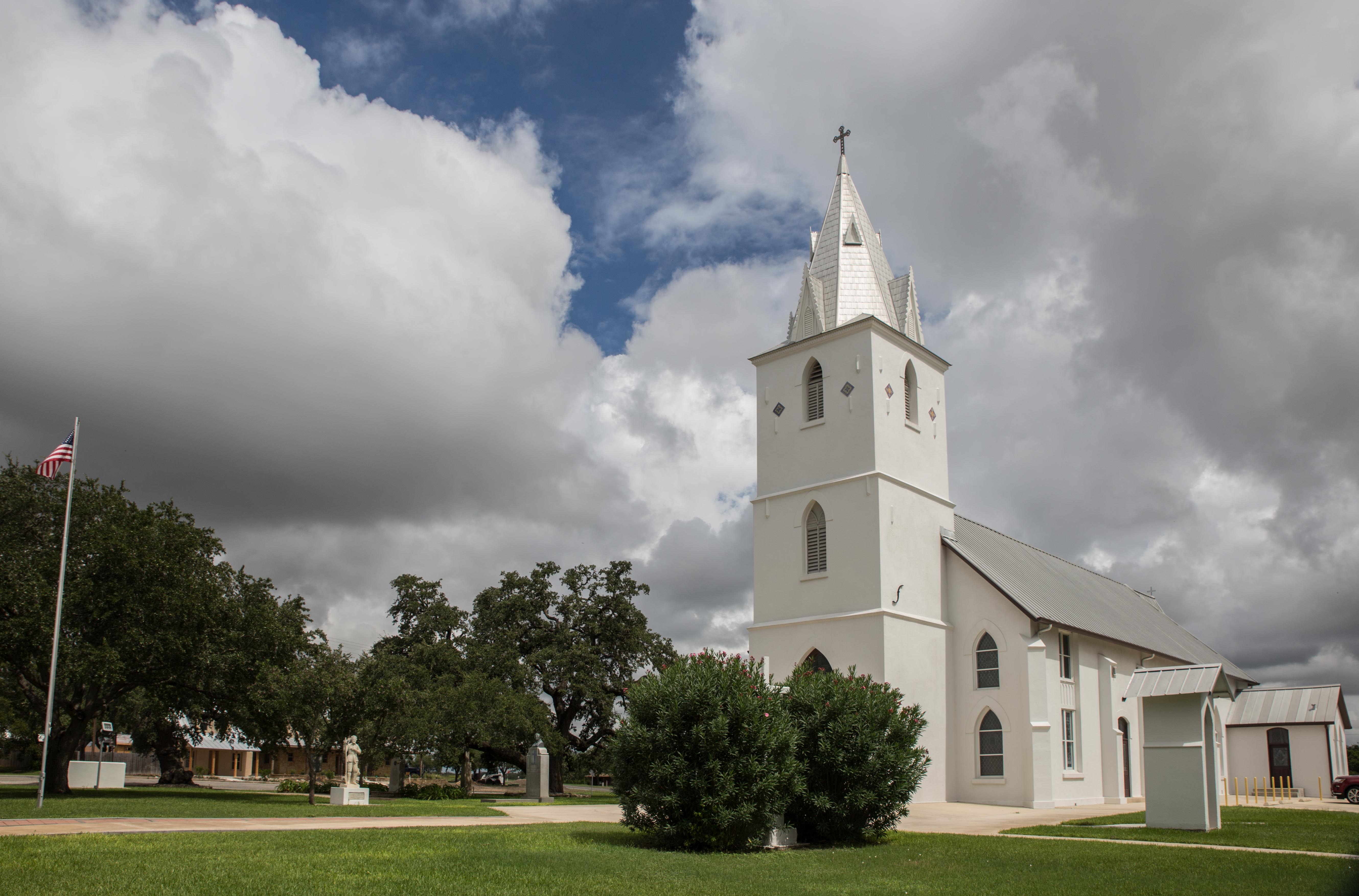
Image credit: Renelibrary · CC BY-SA 4.0 · Wikimedia Commons
Primary source: Texas Historical Commission ↗
Filed under
- texas cultural regions
- texas culture
- texas migration
- tejano texas
- german texas
- czech texas
- african american texas
- east texas culture
- hill country culture
- south texas culture
- texas history
From the magazine
More stories to read next
Then & Now
Texas National Cemeteries: Fort Sam Houston, Houston and Dallas–Fort Worth
August 21, 2026 · About 12 minutes
Then & Now
Texas Military Museums & Historic Sites: The Best Places to See the Story in Person
August 20, 2026 · About 19 minutes

.jpg%3Fwidth%3D1600)