texas history
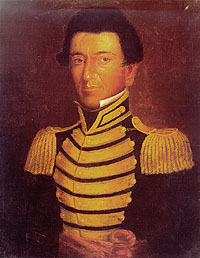
Juan Seguín: The Tejano Leader Who Fought for Texas and Was Later Driven From Home
Juan Seguín fought at San Jacinto, served the Republic and became mayor of San Antonio, yet anti-Tejano hostility later forced one of the revolution’s best-known Tejano leaders into exile.
Juan Nepomuceno Seguín complicates any simple version of the Texas Revolution as a conflict between Anglo settlers and Mexico. Seguín was a Tejano from a prominent San Antonio family, a political leader in Mexican Texas and an officer who fought for the revolutionary cause. He helped evacuate the Alamo, carried messages through Mexican lines and later fought at San Jacinto. After independence he served in the Texas Senate and as mayor of San Antonio. Yet the republic he helped create became increasingly hostile to Tejanos, and threats eventually pushed him into Mexico.
A San Antonio family in a changing borderland
Seguín was born in San Antonio in 1806. His father, Erasmo Seguín, was a respected civic leader who supported Anglo-American colonization under Stephen F. Austin while also participating in Mexican politics. Juan grew up in a bilingual, bicultural world where local families navigated Spanish, Mexican, Tejano and immigrant interests. By his twenties he held municipal office and became involved in the federalist opposition to the increasingly centralized Mexican government.
The revolution and the Alamo
Seguín organized a company of Tejano volunteers and participated in the 1835 campaign around San Antonio. During the Alamo siege in 1836, William Barret Travis sent him out as a courier seeking reinforcements. That mission meant Seguín was not inside the compound when it fell. He later returned and took part in the burial of the defenders’ remains. His story is a reminder that Tejano soldiers were active participants throughout the revolutionary campaign.
San Jacinto and service to the Republic
Seguín and his Tejano company joined Sam Houston’s army and fought at the Battle of San Jacinto on April 21, 1836. After independence he served in the Republic of Texas Senate and later became mayor of San Antonio. He remained a visible bridge between Tejano communities and the new government at a time when land disputes, migration and ethnic prejudice were rapidly changing the political balance of South and Central Texas.
Exile from the Texas he helped create
By the early 1840s, Seguín faced accusations of disloyalty and threats from Anglo newcomers who viewed Tejanos with suspicion. He resigned as mayor and fled to Mexico. There he was compelled to serve in the Mexican military, placing him in the bitter position of fighting against the political community he had previously defended. He later returned to Texas, but the episode captures the insecure status of many Tejano families after independence.
Seguín’s recovery in public memory
For generations, popular Texas Revolution narratives often centered Anglo figures such as Travis, Bowie and Crockett. Modern scholarship and public history have restored greater attention to Seguín and other Tejanos. The city of Seguin was named in his honor, and his remains were reinterred there in 1976. His life now appears more frequently in museums, classrooms and interpretations of the Alamo and San Jacinto.
Why his story is essential
Seguín demonstrates that Texas identity was contested from the start. He could be Mexican, Tejano, federalist, revolutionary officer, Republic senator and San Antonio mayor without those identities being mutually exclusive. His later exile also shows that winning independence did not guarantee equal standing in the new republic. Pairing his biography with guides to the Alamo, San Antonio, Sam Houston and Stephen F. Austin produces a fuller Texas history—one that includes the people who lived in the region before the wave of Anglo migration transformed it.
Why this story still matters
Seguín’s career is essential because it disrupts the simplified idea that the Texas Revolution can be told as a conflict involving only Anglo settlers and Mexico. The Handbook of Texas documents a Tejano military and political leader whose service crossed the Revolution, Republic, and later political upheavals, while Texas archival material places him among the broader set of figures who shaped the state’s early public life. His story shows that Tejano participation was not peripheral to the independence movement and that victory did not produce a simple or secure future for every participant. Seguín’s later experiences also reveal how ethnic suspicion, local power struggles, and changing national boundaries could turn a celebrated patriot into a contested figure. That complexity is precisely why he belongs in a statewide history canon. It makes the Revolution more accurate, connects San Antonio’s Mexican and Texan histories, and gives readers a better framework for understanding loyalty in a borderland society.
Sources and further reading
- Handbook of Texas — Juan Nepomuceno Seguín: https://www.tshaonline.org/handbook/entries/seguin-juan-nepomuceno
- Texas State Library and Archives Commission — Giants of Texas History: https://www.tsl.texas.gov/treasures/giants
Image credit: Public domain · Texas State Library and Archives Commission via Wikimedia Commons
Primary source: Texas State Historical Association ↗
Filed under
- Juan Seguin
- Tejano history
- Texas Revolution
- San Jacinto
- San Antonio
From the magazine
More stories to read next
Then & Now
Texas National Cemeteries: Fort Sam Houston, Houston and Dallas–Fort Worth
August 21, 2026 · About 12 minutes
Then & Now
Texas Military Museums & Historic Sites: The Best Places to See the Story in Person
August 20, 2026 · About 19 minutes

.jpg%3Fwidth%3D1600)