texas history
Davy Crockett in Texas: From Frontier Celebrity to Alamo Legend
Davy Crockett spent only a short time in Texas, but his death at the Alamo transformed an already famous frontiersman into one of the state’s enduring legends.
David Crockett was famous before he ever reached Texas. A Tennessee frontiersman, soldier, storyteller and member of Congress, he had already become a national folk figure through newspaper stories, stage portrayals and his own carefully cultivated public image. His journey to Texas in late 1835 came after political defeat at home. Within months he would die at the Alamo, and the short Texas chapter of his life would eclipse nearly everything that came before it.
The man before the myth
Crockett was born in Tennessee in 1786 and built a reputation as a hunter and backwoodsman, but his career was also political. He served in the Tennessee legislature and three terms in the U.S. House of Representatives. He often resisted policies associated with President Andrew Jackson, including the Indian Removal Act. By the 1830s, Crockett’s public persona blurred biography and entertainment: audiences knew both the real congressman and an exaggerated frontier character who appeared in popular culture.
Why Crockett came to Texas
After losing reelection in 1835, Crockett headed west with a small group of companions. Texas was then in revolt against the central government of Mexico. Crockett reached San Antonio de Béxar in early February 1836 and joined the defenders occupying the former mission known as the Alamo. He was not the commander and had little time to shape strategy, but his fame made his presence symbolically important even before the siege began.
The Alamo and the uncertainty of his final moments
Mexican forces under Antonio López de Santa Anna surrounded the Alamo in late February. The siege ended with the assault of March 6, 1836, when the garrison was overwhelmed. Crockett died during or immediately after the battle. Accounts differ about precisely how. Some traditions describe him falling in combat; other evidence suggests that a small number of defenders may have been captured and executed after the fighting. Responsible Texas history separates what is documented from what later generations wished to believe.
How Davy Crockett became a Texas icon
The Alamo quickly became part of the revolutionary memory that fed the Texian army’s resolve before San Jacinto. Crockett’s preexisting celebrity gave the story an unusually powerful national figure. In the twentieth century, books, films, television and merchandise expanded the legend again. Disney’s 1950s portrayal helped create the coonskin-cap image recognized by generations who knew little about Crockett’s actual political career.
Visiting the places connected to Crockett
For Texas travelers, Crockett’s most important site is the Alamo in downtown San Antonio. A useful visit becomes richer when paired with the San Antonio Missions, the city’s broader Spanish and Mexican history, and Texas Revolution destinations elsewhere in the state. Crockett’s story also connects to the Battle of San Jacinto and to figures including William B. Travis, James Bowie, Juan Seguín and Sam Houston.
What his story tells us about Texas
Crockett’s Texas legacy is a case study in the way history becomes identity. The documented story is dramatic enough: a nationally known former congressman traveled to a revolution on the edge of the United States and died inside a besieged mission. The legend added larger-than-life dialogue and heroic certainty. Understanding both layers does not diminish Crockett. It shows why Texans continue to debate, visit and retell the Alamo nearly two centuries later.
Why this story still matters
Crockett’s Texas reputation is inseparable from the much longer public life he had before reaching San Antonio. The Alamo’s defender record establishes his place in the 1836 battle, while the Handbook of Texas helps separate that final episode from the frontier stories, political career, and later folklore that accumulated around his name. That distinction matters because popular culture often compresses Crockett into a single coonskin-cap image and treats legend as biography. His Texas story is more useful when the documented chronology comes first: a nationally known figure came west, joined the Texas cause, and died at the Alamo, after which memory and entertainment repeatedly reshaped how later generations pictured him. The result is a good example of how Texas history becomes mythology. Visitors can honor the defender without assuming every familiar anecdote is equally well documented, and the strongest interpretation makes room for both the historical person and the legend that followed.
Sources and further reading
- The Alamo — David “Davy” Crockett: https://www.thealamo.org/remember/battle-and-revolution/defenders/david-davy-crockett
- Handbook of Texas — David Crockett: https://www.tshaonline.org/handbook/entries/crockett-david
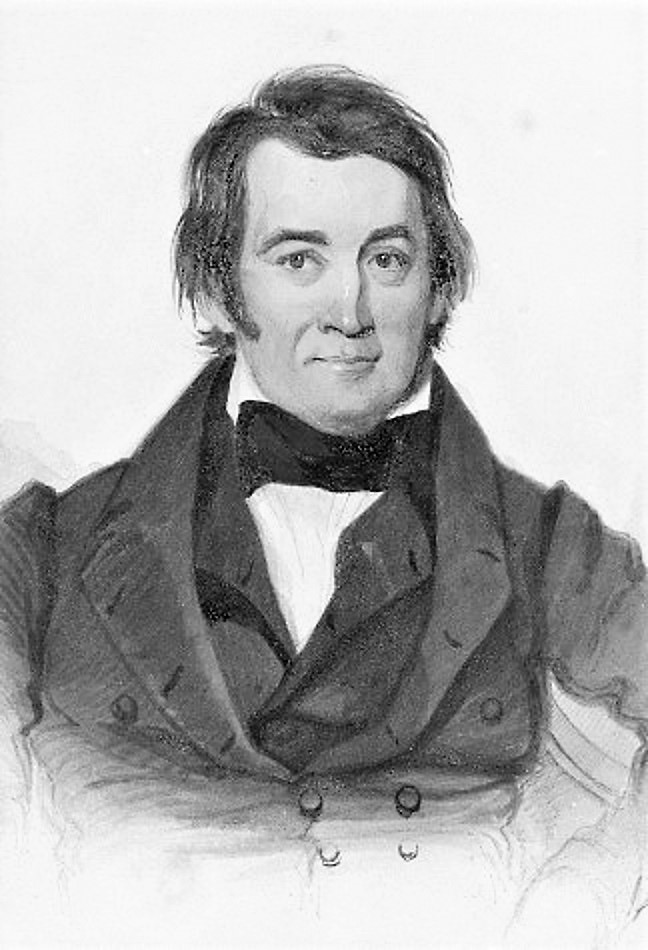
Image credit: Public domain · James Hamilton Shegogue / Smithsonian National Portrait Gallery via Wikimedia Commons
Primary source: The Alamo ↗
Filed under
- Davy Crockett
- Alamo
- Texas Revolution
- San Antonio
- Texas history
From the magazine
More stories to read next
Then & Now
Texas National Cemeteries: Fort Sam Houston, Houston and Dallas–Fort Worth
August 21, 2026 · About 12 minutes
Then & Now
Texas Military Museums & Historic Sites: The Best Places to See the Story in Person
August 20, 2026 · About 19 minutes

.jpg%3Fwidth%3D1600)