texas history
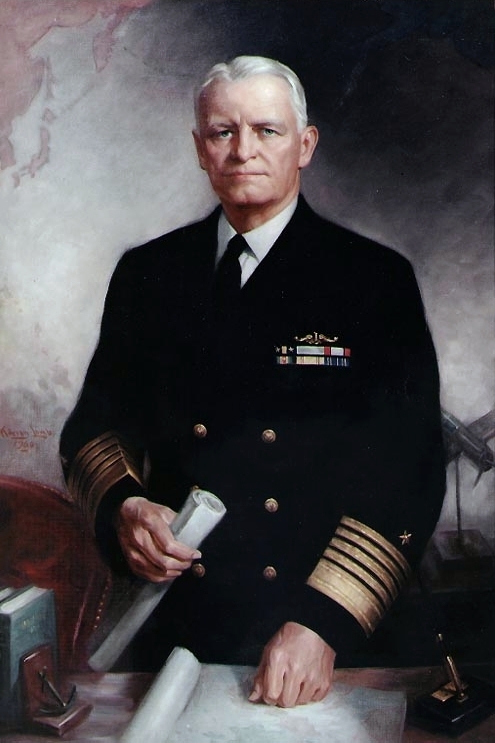
Chester W. Nimitz: The Fredericksburg Texan Who Commanded the Pacific War
Fleet Admiral Chester W. Nimitz grew up far from the ocean in Fredericksburg, then became the senior U.S. naval commander across the Pacific during World War II.
Chester William Nimitz was born in the Texas Hill Country hundreds of miles from the nearest ocean, yet he became one of the most important naval commanders in American history. Raised in Fredericksburg, Nimitz entered the U.S. Naval Academy and built a career around submarines, engineering, logistics and command. Days after the attack on Pearl Harbor, President Franklin D. Roosevelt selected him to command the U.S. Pacific Fleet. He would oversee a vast maritime war from the first defensive campaigns through Japan’s surrender.
Fredericksburg roots
Nimitz was born in 1885 into a German-Texan family. His father died before he was born, and his grandfather Charles Nimitz—merchant, hotelkeeper and former seaman—became an important influence. The family’s Nimitz Hotel later became part of the museum complex that tells the Pacific War story in Fredericksburg. The young Nimitz originally hoped for a West Point appointment but entered Annapolis when a Naval Academy opportunity became available.
A career built before the famous command
Long before 1941, Nimitz developed expertise that fit the war the United States would eventually fight. He served in early submarines, studied diesel propulsion, worked with the emerging fleet-refueling system and held a succession of command and staff jobs. His technical background and calm management style proved valuable in a theater where ships, aircraft, fuel, intelligence and supply lines had to be coordinated across enormous distances.
Taking command after Pearl Harbor
Nimitz assumed command of the Pacific Fleet at the end of 1941 with battleships damaged or destroyed and American morale shaken. Rather than measuring naval power only by the old battle line, the Pacific campaign increasingly depended on aircraft carriers, submarines, intelligence and amphibious operations. The Battle of Midway in June 1942 became a pivotal American victory, followed by the long offensives through the Solomon Islands, Central Pacific and toward the Japanese home islands.
Commanding an ocean-sized war
Nimitz served not only as Commander in Chief, Pacific Fleet, but also as Commander in Chief, Pacific Ocean Areas. He coordinated Army, Navy and Marine forces while working within a divided Pacific command structure that also gave General Douglas MacArthur responsibility in the Southwest Pacific. Operations under Nimitz’s command included campaigns in the Gilberts, Marshalls, Marianas, Iwo Jima and Okinawa. His reputation rests partly on his ability to manage talented, forceful subordinates and adapt strategy as technology and circumstances changed.
Tokyo Bay and Fleet Admiral
Congress created the five-star grade of Fleet Admiral during the war, and Nimitz was promoted in December 1944. On September 2, 1945, he signed the Japanese surrender documents aboard USS Missouri on behalf of the United States. He later served as Chief of Naval Operations and remained an influential figure in Navy affairs after retirement from active service.
Why Fredericksburg is the place to understand Nimitz
The National Museum of the Pacific War in Fredericksburg grew from the Admiral Nimitz Museum and today interprets the much larger Pacific conflict. That makes a Nimitz biography unusually useful for Texas travel: a visitor can move directly from one Texan’s life into a comprehensive account of World War II in the Pacific. It also makes Fredericksburg more than wineries and Hill Country weekends. The town is one of the state’s most important military-history destinations.
Why this story still matters
Nimitz’s legacy connects a small-town Texas upbringing to one of the largest naval commands in American history. The Naval History and Heritage Command provides the official framework for his career and his leadership in the Pacific during World War II, while the Handbook of Texas places that career in the context of Fredericksburg and the state that later made his birthplace part of a major museum complex. Keeping both perspectives in view prevents the story from becoming only a list of wartime commands. Nimitz also represents the long professional path behind senior military leadership: education, technical experience, staff work, command responsibility, and years of service before the moments for which he became famous. In Texas, his legacy is unusually tangible because visitors can connect the biography to Fredericksburg and the National Museum of the Pacific War, making national military history part of a specific Texas place rather than an abstract chapter in a textbook.
Sources and further reading
- U.S. Naval History and Heritage Command — Fleet Admiral Chester W. Nimitz: https://www.history.navy.mil/browse-by-topic/people/chiefs-of-naval-operations/fleet-admiral-chester-w--nimitz.html
- Handbook of Texas — Chester William Nimitz: https://www.tshaonline.org/handbook/entries/nimitz-chester-william
Image credit: Public domain · U.S. Navy via Wikimedia Commons
Primary source: U.S. Naval History and Heritage Command ↗
Filed under
- Chester Nimitz
- Fleet Admiral Nimitz
- Fredericksburg
- World War II
- Texas military history
Plan the trip
Places connected to this story
Destinations explicitly tied to this article in the Texas Defined guide.
Fredericksburg · Gillespie County
Fredericksburg
A Hill Country town shaped by German-Texan heritage, a walkable Main Street, wineries, museums and easy access to Enchanted Rock and scenic Gillespie County roads.
Best season: Fall through spring for comfortable walking; spring adds wildflowers and holiday season brings heavy crowdsUpdated Sep 2026- Historic Main Street
- National Museum of the Pacific War
- German-Texan food and heritage

From the magazine
More stories to read next
Then & Now
Texas National Cemeteries: Fort Sam Houston, Houston and Dallas–Fort Worth
August 21, 2026 · About 12 minutes
Then & Now
Texas Military Museums & Historic Sites: The Best Places to See the Story in Person
August 20, 2026 · About 19 minutes

.jpg%3Fwidth%3D1600)