texas history
Audie Murphy: The Texas Farm Boy Who Became One of World War II’s Most Decorated American Soldiers
Born to a poor North Texas sharecropping family, Audie Murphy became one of America’s most decorated WWII combat soldiers, then spent decades living with the war’s consequences.
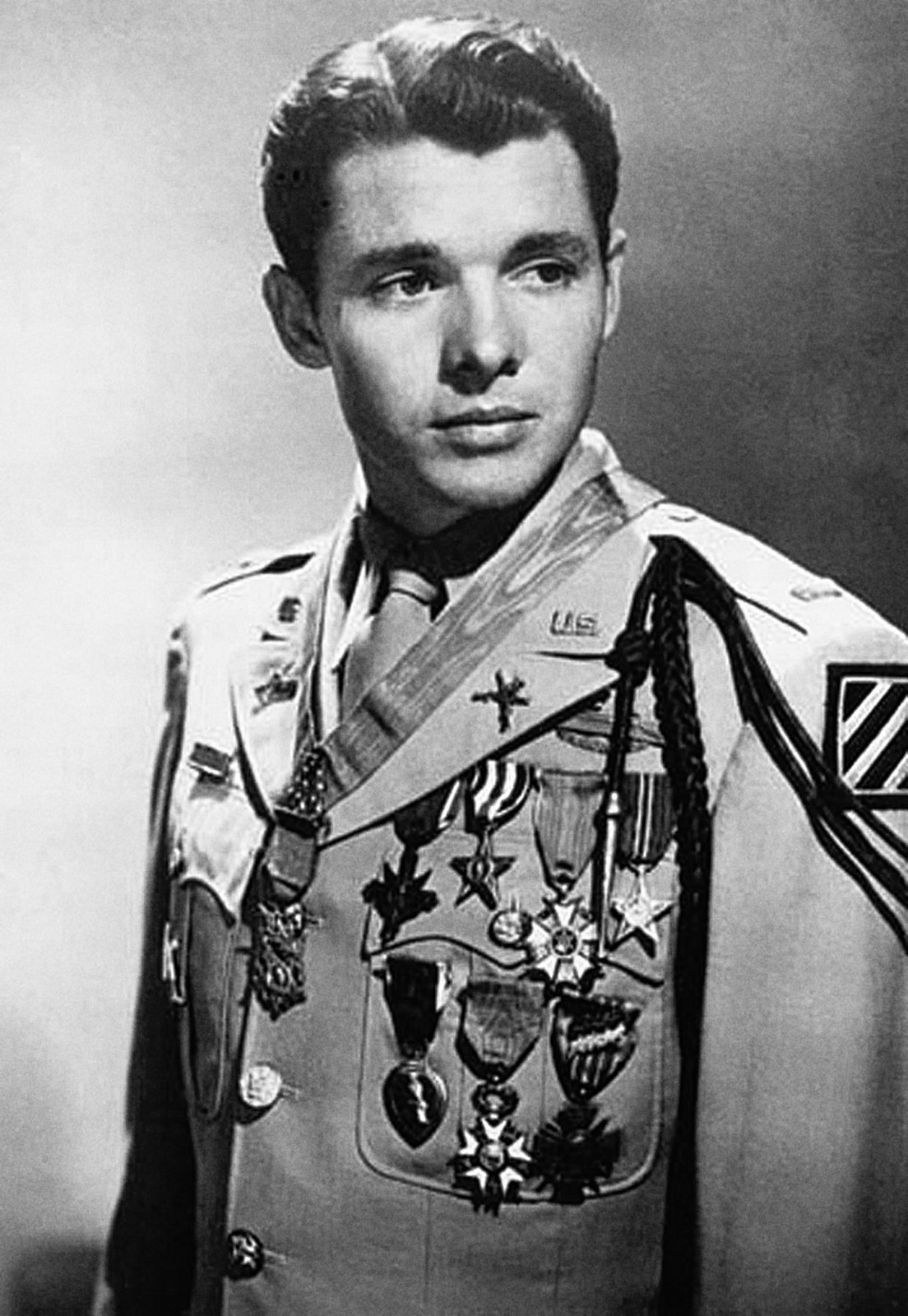
Audie Leon Murphy’s life sounds like a wartime legend, but the documented record is remarkable enough without exaggeration. Born into a poor sharecropping family in Hunt County, Texas, Murphy enlisted after the United States entered World War II and became one of the most decorated American combat soldiers of the conflict. He received the Medal of Honor for actions in France in January 1945. After the war he became a successful actor and wrote about his combat experience, while also speaking publicly about the nightmares and trauma that followed him home.
A difficult childhood in North Texas
Murphy was born in 1925 near Kingston, Texas, and grew up in a large family during the Depression. His father left the family, and his mother died when Audie was a teenager. Hunting helped him put food on the table and developed the marksmanship later associated with his military service. After Pearl Harbor, Murphy tried to enlist while still underage. Once accepted into the Army, his small size initially made him an unlikely image of a future combat hero.
Combat from Sicily to France
Murphy served with the 3rd Infantry Division and fought in Sicily, mainland Italy, southern France and the push into Germany. He was repeatedly exposed to close combat and rose through the enlisted ranks before receiving a battlefield commission. His decorations accumulated across multiple campaigns, not a single dramatic day. That wider record matters because it shows how sustained and dangerous his wartime service was.
The Medal of Honor action
On January 26, 1945, near Holtzwihr, France, Murphy’s company faced a German attack supported by tanks. After ordering his men back, Murphy climbed onto a burning tank destroyer and used its .50-caliber machine gun against advancing troops while calling artillery fire by field telephone. He continued despite wounds and the danger that the vehicle could explode. His actions helped stop the attack and led to the Medal of Honor, the nation’s highest military decoration.
Hollywood and To Hell and Back
After returning home, Murphy’s photograph on the cover of Life magazine helped open doors in Hollywood. He appeared in dozens of films, especially Westerns, and published the memoir 'To Hell and Back' in 1949. In the 1955 movie adaptation he played himself, an unusual choice that turned his own combat story into one of the era’s best-known war films. The film career made Murphy a cultural figure as well as a military one.
The part of the hero story that matters most
Murphy did not present war as an uncomplicated adventure. He experienced insomnia, nightmares and what would now be understood through the framework of post-traumatic stress. At a time when veterans were often expected to remain silent about psychological injury, he discussed his symptoms and advocated for greater attention to returning service members. That part of his legacy gives the biography continuing relevance beyond medals and movies.
Audie Murphy’s Texas legacy
Murphy died in a plane crash in Virginia in 1971 and was buried at Arlington National Cemetery. Texas preserves his memory through museums, markers, schools and veterans’ organizations, including the Audie Murphy/American Cotton Museum in Greenville. His story belongs alongside Texas military-history figures such as Fleet Admiral Chester Nimitz because both connect local Texas origins to events that reshaped the world. Murphy’s life also reminds us that heroism and lasting injury can exist in the same biography.
Why this story still matters
Murphy’s Texas story is strongest when his wartime record and postwar fame are read together rather than as separate legends. Arlington National Cemetery documents the decorations and combat service that made him one of the best-known American soldiers of World War II, while the Handbook of Texas follows the same life back to rural Texas and forward into acting and public memory. That combination matters because the later celebrity did not create the military reputation; it amplified a record that had already been formally recognized. It also helps explain why Murphy remains part of Texas culture well beyond military history. His name connects Depression-era hardship, wartime service, the difficult transition home, Hollywood’s appetite for heroic narratives, and the way Texans remember veterans through museums, memorials, biographies, and family stories. Reading both records keeps the article grounded in documented service while still explaining why the legacy became so durable.
Sources and further reading
- Arlington National Cemetery — Audie Murphy: https://www.arlingtoncemetery.mil/Explore/Notable-Graves/Medal-of-Honor-Recipients/World-War-II-MoH-recipients/Audie-Murphy
- Handbook of Texas — Audie Leon Murphy: https://www.tshaonline.org/handbook/entries/murphy-audie-leon
Image credit: Public domain · U.S. Army via Wikimedia Commons
Primary source: Texas State Historical Association ↗
Filed under
- Audie Murphy
- World War II
- Texas military history
- Medal of Honor
- Texas veterans
From the magazine
More stories to read next
Then & Now
Texas National Cemeteries: Fort Sam Houston, Houston and Dallas–Fort Worth
August 21, 2026 · About 12 minutes
Then & Now
Texas Military Museums & Historic Sites: The Best Places to See the Story in Person
August 20, 2026 · About 19 minutes

.jpg%3Fwidth%3D1600)