texas history
Brazoria County Plantation History: Slavery, Emancipation and Archaeology
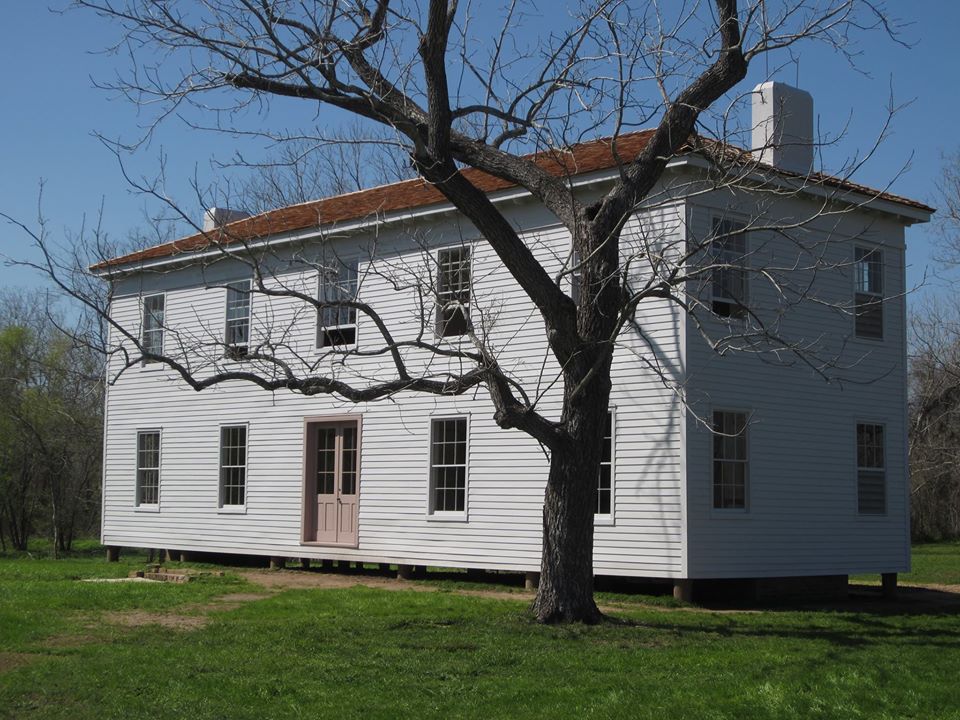
Levi Jordan and Varner-Hogg preserve two difficult, essential Texas landscapes where enslaved labor, emancipation, Reconstruction, sharecropping, ranching and archaeology can be read together.
Brazoria County is one of the most important places in Texas for understanding plantation slavery because the history is not confined to a single preserved house or one famous family. The Lower Brazos and San Bernard river country became an agricultural center where sugar and cotton wealth depended on enslaved labor, and the region remained a laboratory for changing labor systems after emancipation.
Two Texas Historical Commission sites make that history unusually visible. Levi Jordan Plantation preserves a major antebellum plantation and an active archaeological record focused heavily on the people who were enslaved there and the communities that followed emancipation. Varner-Hogg Plantation preserves a different but overlapping trajectory: early colonization, plantation slavery, convict leasing, sharecropping, ranching and later association with former governor James Stephen Hogg and his family.
Visiting the two together is more useful than treating either as a decorative historic home. The comparison forces the central questions into view: who did the work, who accumulated wealth, what changed after 1865, what did not change quickly, and how historians recover the lives of people who left far fewer written records than the landowners who controlled them.
Start with the landscape, not the mansion
Plantation history is often visually dominated by the owner's house because it is the largest surviving building. That can distort the story before interpretation even begins. The house represented only one part of a much larger labor system that included fields, mills, kitchens, workshops, quarters, roads, waterways and the daily movement of enslaved people whose work made the property productive.
In Brazoria County, rivers and low coastal-plain geography mattered enormously. Sugar and cotton required labor-intensive agriculture and access to transportation. The Brazos and San Bernard systems tied plantations to regional and Gulf commerce, helping explain why plantation agriculture became so concentrated in this part of Texas.
Levi Jordan Plantation: a large operation on the San Bernard River
Levi Jordan moved his family and enslaved workers to Texas in the late 1840s and established a sugar and cotton plantation along the San Bernard River. By 1860 the operation had become large, and federal census records documented 134 enslaved people associated with Jordan's property.
The scale matters because it changes how the surviving house should be read. Enslaved workers did far more than cultivate crops. Texas Historical Commission research documents enslaved labor in the construction of the plantation house itself, including hand-hewn local timbers and bricks made from local clay. The built environment therefore contains physical evidence of the people whose labor was coerced.
The site today emphasizes multiple perspectives rather than presenting the plantation simply through the Jordan family. That interpretive shift is especially important at a place where written records often preserve the decisions of owners more clearly than the thoughts and experiences of the enslaved community.
Why archaeology matters so much at Levi Jordan
Archaeology can recover evidence that traditional family papers do not. Objects discarded, lost or deliberately placed around living areas can reveal foodways, household practices, trade, belief, adaptation and community relationships. At Levi Jordan, archaeological work has become one of the site's defining strengths because it helps historians reconstruct the lives of people who were systematically underrepresented in written archives.
That does not mean artifacts speak for themselves. Archaeological interpretation depends on context: where an object was found, what other materials surrounded it, how the site changed over time and what documentary records can or cannot corroborate. The value comes from combining material evidence with oral history, genealogy and archival research rather than treating one object as a complete story.
For visitors, the archaeology lab and site interpretation can make the plantation feel less like a frozen nineteenth-century house tour and more like an ongoing historical investigation. The question becomes not only what happened here, but how we know.
Emancipation changed the legal system of labor—not the landscape overnight
Emancipation in 1865 ended legal slavery, but it did not erase the plantation economy or the enormous imbalance in land ownership and resources that slavery had produced. Formerly enslaved people entered freedom while negotiating wages, mobility, family reunification, education, contracts and political rights in a society that continued to impose racial barriers.
That transition is why Reconstruction belongs inside plantation interpretation rather than as an epilogue. The postwar period asks what happened to the people who had been forced to work the land once the legal basis for ownership of human beings was abolished. Labor systems changed, but economic dependency and coercion could persist in new forms.
Varner-Hogg: one property, several labor systems
Varner-Hogg Plantation offers a long timeline beginning with Martin Varner's 1824 land grant under Stephen F. Austin's colony. Enslaved labor was present early, and after Columbus Patton acquired the property in the 1830s, the plantation expanded dramatically. Texas Historical Commission research describes dozens of people enslaved by the Patton family and more than one hundred people enslaved on the broader plantation at points in its history.
Enslaved workers made bricks and constructed buildings as well as producing sugar and other agricultural goods. Reading the surviving main house without that labor history would mistake the product for the producer. The architecture is evidence of wealth, but also evidence of whose labor created that wealth.
After slavery: convict leasing and sharecropping
Varner-Hogg is especially important because the site's labor history continues beyond emancipation. The plantation used leased convict labor during the nineteenth century. State investigators later documented severe mistreatment, and the system at the property ended as scrutiny and costs mounted.
The plantation then moved toward sharecropping. That transition should not be narrated as a smooth march from slavery to free and equal labor. Convict leasing and sharecropping operated under different legal structures, but both emerged in a post-emancipation South where Black freedom existed alongside powerful efforts to control labor, mobility and economic opportunity.
Later the property shifted toward ranching, and African American cowboys formed much of that workforce. That history complicates another familiar Texas image: the cowboy. Black labor was central not only to plantation agriculture but also to the ranching economy that followed.
The Hogg family and the oil-era layer
Former Texas governor James Stephen Hogg purchased the property in 1901 believing oil might lie beneath it. His family's later association with the plantation added another layer of wealth, politics, collecting and preservation. The site consequently spans far more than the antebellum period.
That later history is worth understanding, but it should not push the earlier labor story into the background. One of the strongest ways to read Varner-Hogg is to ask how the same land generated different forms of wealth across time—from agricultural production to ranching to mineral speculation—and who performed the labor in each phase.
Why visit Levi Jordan and Varner-Hogg together
The two sites are close enough geographically to function as one regional history study. Levi Jordan's archaeological emphasis helps visitors think about evidence, community and Reconstruction. Varner-Hogg's longer sequence of slavery, convict leasing, sharecropping, ranching and oil-era ownership helps visitors compare labor systems across generations.
A combined visit also reduces the temptation to treat one plantation as representative of every plantation. Ownership patterns, crop choices, labor force size, surviving buildings and postwar transitions differed. Comparison is a better historical method than turning one house into a universal model.
Add West Columbia for the political context
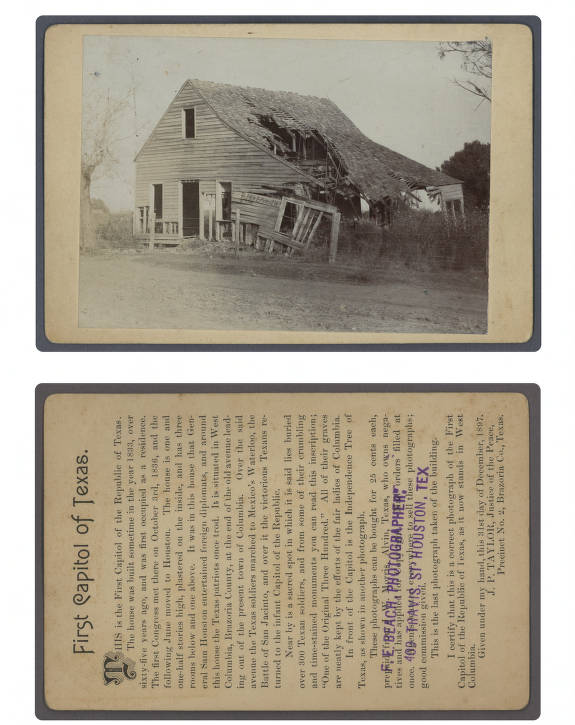
The nearby First Capitol of Texas and Stephen F. Austin Memorial add another layer to a Brazoria County route. Plantation agriculture did not develop separately from the political systems of colonization, the Republic and statehood. Land grants, migration policy, slavery law and access to markets were political choices as well as economic conditions.
That wider itinerary helps connect individual properties to state formation. The same region contains sites associated with Stephen F. Austin, the first government of the Republic and plantation economies built with enslaved labor. Those histories happened beside one another.
How to visit responsibly
- Begin with the people who worked the land, not only the families who owned it.
- Use the official interpretation and archaeology to distinguish documented evidence from plantation mythology.
- Treat emancipation and Reconstruction as central chapters, not a short ending after the Civil War.
- Ask how labor systems changed across slavery, convict leasing, sharecropping and ranching.
- Avoid romantic language about plantation life that turns coercive labor systems into architecture or décor.
- Check both sites' official pages before traveling for current hours, tour formats and combined-admission information.
What these sites contribute to Texas history
Texas history is often told through independence, cattle, oil and political personalities. Levi Jordan and Varner-Hogg show that those familiar stories are incomplete without slavery, emancipation and the long struggle over labor and freedom. The wealth of early Texas was not produced only by adventurous settlers and entrepreneurs; it was also produced through coerced work by people whose lives deserve to be interpreted as central to the state, not peripheral to it.
The strongest reason to visit is therefore not nostalgia. It is evidence. Buildings, ruins, archaeological deposits, census records, labor systems and descendant histories allow visitors to see how one region moved through slavery, emancipation and new economic orders without pretending that each transition erased what came before.
Image credit: Texas Historical Commission · CC BY 4.0 · Wikimedia Commons
Primary source: Texas Historical Commission ↗
Filed under
- texas slavery history
- brazoria county history
- levi jordan plantation
- varner hogg plantation
- emancipation
- reconstruction
- texas archaeology
Plan the trip
Places connected to this story
Destinations explicitly tied to this article in the Texas Defined guide.
Brazoria · Brazoria County
Levi Jordan Plantation State Historic Site
The plantation landscape preserves evidence of the people—enslaved and free—whose labor and communities shaped a major sugar and cotton operation. Interpretation centered on multiple perspectives makes this an important stop for understanding slavery, emancipation and postwar community life on the Gulf Coast.
Best season: Year-round; spring and fall are usually the most comfortable for outdoor portions of a visit.Updated Aug 2026- slavery and emancipation
- plantation history
- African American history
West Columbia · Brazoria County
Varner-Hogg Plantation State Historic Site
The plantation site preserves more than a century of layered stories involving enslaved labor, emancipation, agriculture, oil wealth and the families who controlled or worked the land. Its interpretation is most valuable when treated as a long history of changing power, labor and community rather than as a single historic house.
Best season: Year-round; spring and fall are usually the most comfortable for outdoor portions of a visit.Updated Aug 2026- slavery and emancipation
- plantation history
- Texas oil era
West Columbia · Brazoria County
First Capitol of Texas
Columbia served as the first capital of the Republic of Texas, where Sam Houston was inaugurated as president in October 1836. The site anchors a Brazoria County route through the earliest months of the Republic and Stephen F. Austin's final chapter.
Best season: Year-round; spring and fall are usually the most comfortable for outdoor portions of a visit.Updated Aug 2026- Republic of Texas
- Sam Houston
- early state capitals
West Columbia · Brazoria County
Stephen F. Austin Memorial
The memorial marks the place associated with the home where Stephen F. Austin died in December 1836, only months after Texas won independence. Combine it with the First Capitol and nearby Brazoria County sites to follow Austin's colony from its beginnings through the Republic's first year.
Best season: Year-round; spring and fall are usually the most comfortable for outdoor portions of a visit.Updated Aug 2026- Stephen F. Austin
- Republic of Texas
- Brazoria County


From the magazine
More stories to read next
Then & Now
Texas National Cemeteries: Fort Sam Houston, Houston and Dallas–Fort Worth
August 21, 2026 · About 12 minutes
Then & Now
Texas Military Museums & Historic Sites: The Best Places to See the Story in Person
August 20, 2026 · About 19 minutes

.jpg%3Fwidth%3D1600)