Texas Explained
Texas Park Roads and Recreational Roads Explained
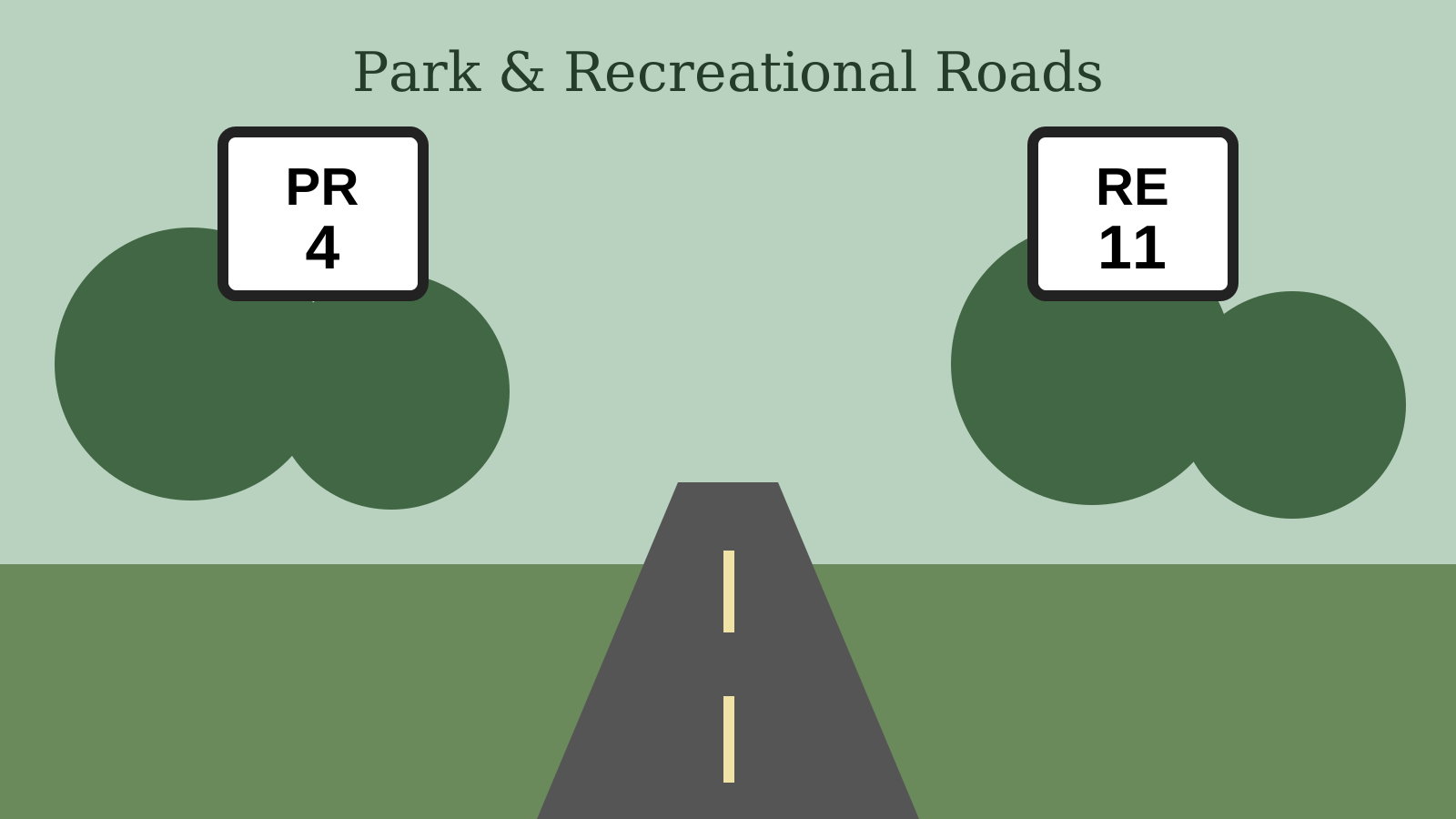
PR and RE shields belong to two of the smallest, most destination-specific systems on the Texas highway map. Park Roads lead to recognized parks, while Recreational Roads connect recognized recreation areas to the state system.
Not every black-and-white Texas route shield belongs to a long-distance highway. Park Roads and Recreational Roads are small systems built around access to particular kinds of destinations. Their value is not corridor length; it is the formal state connection they provide to parks and recreation areas.
What a Park Road is
TxDOT defines a Park Road as a roadway to a recognized state or national park that has been designated by the Texas Transportation Commission. That means a PR shield outside a park is part of the state highway system, just like better-known SH, FM or RM routes.
Inside a state park, the rule changes
TxDOT's highway-designations page makes an important distinction: roads within Texas state parks are maintained by TxDOT by law and usually do not need individual Park Road designations. The signed PR system is therefore most useful for understanding designated approaches and connections, not every paved road inside a park boundary.
What a Recreational Road is
A Recreational Road, abbreviated RE, is a roadway to a recognized recreational area designated by the Texas Transportation Commission. The category gives Texas another way to place a destination-oriented access road on the state system even when the destination is not a state or national park.
Recreational Road Spurs exist too
TxDOT also recognizes Recreational Road Spurs. The glossary describes them as roads that usually begin on an on-system roadway and end on an off-system roadway. Like other spurs, they formalize a short branch connection rather than a long through corridor.
Why these systems matter on a travel map
PR and RE routes often point toward the transition from ordinary transportation to a destination landscape. They can connect a larger highway to a park entrance, lake, historic recreation area or other public-use destination. The route number is therefore a clue about why the state keeps that connection in its system.
Designation and maintenance are different questions
The Park Road example shows why highway language can be confusing. A road can be maintained by TxDOT without carrying a designated PR number, while another road outside the park can be both TxDOT-maintained and formally designated. Maintenance responsibility and highway-system designation overlap, but they are not identical concepts.
How to read PR and RE shields
- PR means a designated Park Road serving a recognized state or national park.
- Roads inside a Texas state park may be maintained by TxDOT without a PR designation.
- RE identifies a designated road serving a recognized recreational area.
- RP identifies a Recreational Road Spur.
- These are destination-access systems, not miniature versions of Interstate or U.S. highways.
Small highway systems with a clear purpose
Park and Recreational Roads show how detailed the Texas highway system really is. TxDOT does not use one generic label for every state-maintained road. It preserves separate systems for roads whose main job is connecting Texans with parks and recreation—making the shield itself a clue to the destination ahead.
Primary source: Texas Department of Transportation ↗
Filed under
- Texas Park Roads
- Recreational Roads
- PR roads
- RE roads
- Texas state parks
- TxDOT
From the magazine