Texas Explained
Texas Loops and Spurs Explained: The Roads Around and Off the Main Highway
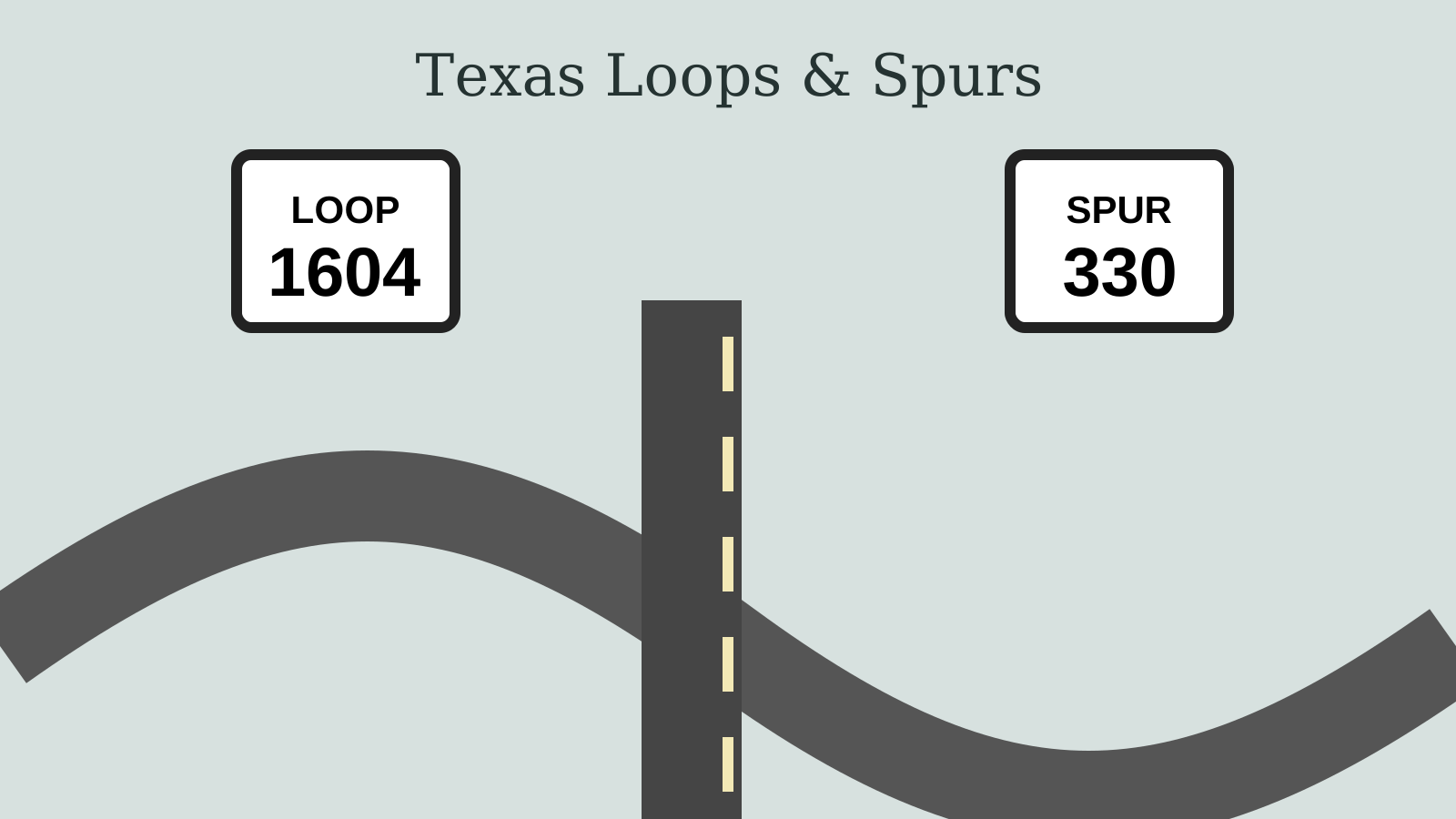
A Loop is usually built to route traffic around something; a Spur usually branches away and ends. Texas uses both designations across urban interchanges, bypasses and short state-system connectors, but their names do not always describe the road shape people expect.
Texas highway maps are full of routes labeled Loop and Spur, but the words are administrative designations rather than perfect geometric descriptions. A Loop may not form a complete circle, and a Spur may be much more important than the word sounds.
What a State Highway Loop is
TxDOT defines a State Highway Loop as a roadway usually created as a bypass and designated by the Texas Transportation Commission. The key word is usually. Many loops developed to move through traffic around a town or central area, but decades of growth can turn yesterday's bypass into today's major urban corridor.
Why a loop does not have to be circular
In everyday speech, a loop sounds like a road that returns to its starting point. In highway administration, the designation can describe a bypassing route that reconnects with a larger system without forming a neat circle. The route's legal history matters more than its shape on a modern map.
What a State Highway Spur is
TxDOT defines a State Highway Spur as a roadway that usually begins on a state highway and ends on an off-system roadway. In practical terms, a spur is commonly a short branch that extends state-system access toward a destination, community or connection that does not continue as another state highway.
Other highway systems have spurs too
Texas uses spur concepts beyond the State Highway system. FM and RM roads can have spurs, and federal highway systems can use spur designations as well. That is why the shield and route class matter: 'Spur' alone does not tell you which highway family the road belongs to.
Loops often become urban main roads
A bypass built outside a town can attract development because it offers access and traffic. Over time, commercial strips, subdivisions and new intersections can surround it. The designation remains a record of the route's place in the highway system even when the road no longer feels like an edge-of-town bypass.
Spurs preserve short state connections
A short connector may be too important to disappear from the state system but too limited to function as a through highway. The Spur category gives TxDOT a way to keep that branch formally designated and maintained without pretending it is a longer corridor.
How to read Loop and Spur on a Texas map
- Treat Loop as a highway-system designation, not proof of a circular road.
- Expect many Loops to have originated as bypasses.
- Treat Spur as a branch connection that often terminates away from another state-system road.
- Check the shield or route class because several highway systems can use spur designations.
- Remember that urban growth can make an old bypass or connector look very different from its original purpose.
The designation records what the road was built to do
Loops and Spurs are useful because they reveal the architecture of the highway network. Through routes carry the long corridor; loops redirect or bypass; spurs extend outward to a destination or local connection. Texas growth can blur those roles on the ground, but the designations preserve the logic underneath the map.
Primary source: Texas Department of Transportation ↗
Filed under
- Texas loops
- Texas spurs
- state highway loop
- state highway spur
- TxDOT
- Texas highways
From the magazine