
texas history
How Texans Traveled Before Highways: Stagecoach Inns, Wagon Roads and Harvey Houses
Use Fanthorp Inn, Landmark Inn and the Slaton Harvey House to follow Texas travel from stage roads and wagon freight to the railroad networks that transformed distance, lodging and food on the road.
Before interstates, airports and reliable automobiles, travel across Texas was governed by water, roads, horses, wagons, stage schedules and eventually railroads. A trip that now takes a few hours could require an overnight stop, fresh animals, meals, repairs and information about the road ahead.
Three preserved places make that transformation easy to see. Fanthorp Inn belongs to the stage-road world of the Republic and early statehood. Landmark Inn grew beside a freight and stage route west from San Antonio. The Slaton Harvey House represents the railroad system that later compressed distance and reorganized where travelers stopped to eat and rest.
Fanthorp Inn: when the road came to the house
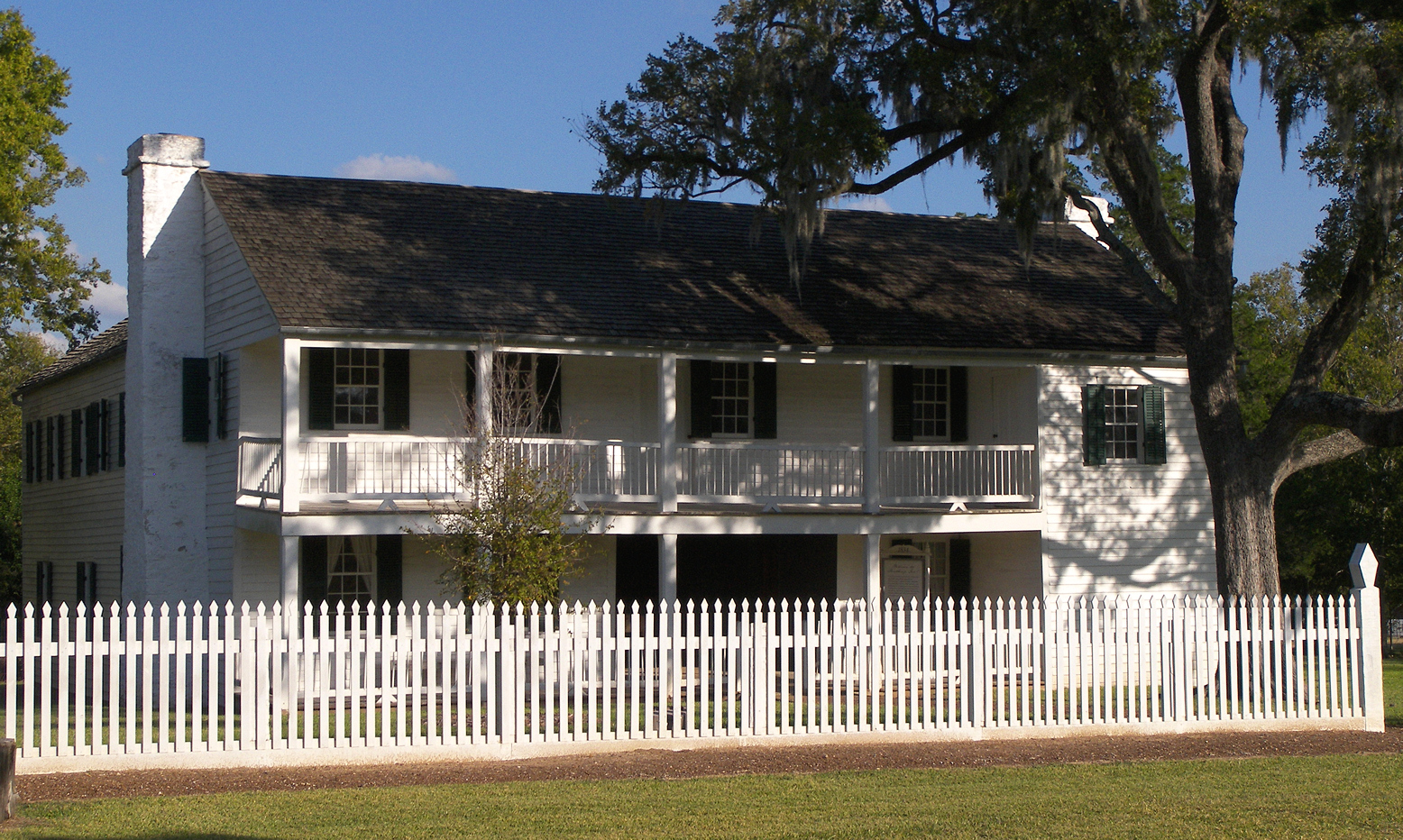
Henry Fanthorp built his home in 1834 on land crossed by important travel routes. The location brought people directly to his door, and Fanthorp turned traffic into a business. He became postmaster, sold goods and services, and expanded the property into a well-known inn and tavern.
By 1850 the complex had grown dramatically. Travelers did not arrive simply for a bedroom. An inn on a stage route functioned as a transportation node where passengers, horses, mail, meals, news and local commerce all intersected.
The site also shows how road travel shaped social networks. Political leaders, merchants and ordinary travelers could cross paths in the same dining room because long-distance movement depended on a relatively small number of practical stopping places.
Stage roads created a network before railroads did
Fanthorp stood near intersecting routes linking settlements across Texas and beyond. Stage travel relied on road conditions, river crossings, weather, animal changes and coordinated stops. The network was slower and less predictable than rail travel, but it connected government centers, market towns and frontier communities long before a statewide rail grid existed.
That is why historic inns matter as transportation sites rather than just preserved houses. Their architecture records the needs of movement: guest rooms, dining spaces, carriage areas, kitchens, stores and postal functions accumulated where travelers repeatedly stopped.
Landmark Inn: one day's wagon journey from San Antonio
Castroville developed along the Medina River on the freight road leading west from San Antonio toward Chihuahua and El Paso. The Texas Historical Commission describes the location as roughly one day's wagon journey from San Antonio, which helps explain why a commercial stopping place could succeed there.
The complex that became Landmark Inn included a residence, mercantile store, stage stop, post office and later hotel rooms. The property also developed milling and other local industry, showing how transportation stops could grow into broader commercial centers serving both residents and travelers.
Landmark Inn is especially useful because visitors can still stay overnight at the historic property. That turns lodging itself into interpretation: the site preserves the kind of place where distance was once measured in the number of stops required between communities.
Freight, mail and meals moved together
In the stage and wagon era, transportation categories overlapped. The same road might carry private travelers, freight wagons, mail, livestock and military traffic. Inns and stores survived because they served several of those needs at once.
A modern gas station, hotel, restaurant and package-delivery hub are usually separate businesses. Nineteenth-century roadside complexes often bundled equivalent functions because the volume of traffic was smaller and travelers could not assume another service stop would appear a few miles later.
Railroads changed the map
Railroads accelerated travel and shifted commercial advantage toward communities with stations and division points. Fanthorp's stagecoach business declined as rail transportation expanded, and Castroville experienced the opposite problem when the railroad bypassed the town in the 1880s.
The important point is not simply that trains were faster. Railroads reorganized time and geography. Schedules became more regular, larger volumes of freight could move farther, and new towns grew around depots, shops and crew facilities while some older road-based stopping places lost traffic.
Slaton Harvey House: food becomes railroad infrastructure
The Slaton Harvey House opened in 1912 as an eating house serving Santa Fe Railway passengers at a division point. It belonged to the Fred Harvey system, which standardized food and hospitality across a long railroad network in an era when reliable meals were part of the passenger-travel problem.
The Slaton building served travelers until 1942 and survives as the last remaining structure from the town's former Santa Fe division-point complex. Its preservation makes the railroad era tangible in a different way than a locomotive display can: the building explains what passengers and crews needed between trains.
The Harvey system also reveals how transportation created national supply chains. Food, staff, menus and service standards could be coordinated across a network stretching far beyond Texas, linking local station buildings to a continental travel economy.
Fort Lancaster: the road itself was strategic
Fort Lancaster adds the overland military dimension. The Army post was established along the San Antonio–El Paso road, a major route across West Texas. Protecting travel corridors mattered because mail, troops, freight and civilians all depended on roads crossing long stretches with little infrastructure.
The fort's isolated ruins make the logistical challenge visible. Modern highways hide distance with speed and fuel stations; nineteenth-century travelers had to think constantly about water, forage, animals, security and the next reliable stop.
A transportation-history route
- Fanthorp Inn: begin with Republic-era roads, stagecoaches, mail and hospitality in Anderson.
- Landmark Inn: compare another stage-and-freight stop on the road west from San Antonio, with the option to stay overnight in the historic complex.
- Fort Lancaster: use the remote West Texas post to understand the road itself as military and economic infrastructure.
- Slaton Harvey House: finish in the railroad era, where schedules, division points and standardized passenger service changed how distance worked.
These sites are too dispersed for one weekend, but that is appropriate for the subject. Transportation history is about networks. Each place represents a different point where roads, people, goods and services had to connect.
Together they show that Texas travel did not evolve in one clean leap from horse to automobile. Stage roads, wagon freight, postal routes, military roads and railroads overlapped for decades. The preserved inns and depot buildings survive because transportation shaped not only how Texans moved, but where communities prospered and what businesses they needed.
Image credit: Renelibrary · CC BY-SA 4.0 · Wikimedia Commons
Primary source: Texas Historical Commission ↗
Filed under
- texas transportation history
- stagecoach texas
- fanthorp inn
- landmark inn
- slaton harvey house
- texas railroads
- historic inns
Plan the trip
Places connected to this story
Destinations explicitly tied to this article in the Texas Defined guide.
Anderson · Grimes County
Fanthorp Inn State Historic Site
Built in the 1830s, Fanthorp Inn became an important stagecoach stop and hostelry on an early Texas transportation route. The inn makes pre-railroad travel tangible: meals, horses, overnight lodging and news all converged at places like this.
Best season: Year-round; spring and fall are usually the most comfortable for outdoor portions of a visit.Updated Aug 2026- stagecoach travel
- Republic-era Texas
- historic inns
Castroville · Medina County
Landmark Inn State Historic Site
The 19th-century complex served travelers and residents as a tavern, store, hotel and mill along the Medina River. An overnight stay can turn a historic-site visit into part of the experience while introducing Castroville's distinctive Alsatian heritage.
Best season: Year-round; spring and fall are usually the most comfortable for outdoor portions of a visit.Updated Aug 2026- historic lodging
- Castroville
- Alsatian Texas
Slaton · Lubbock County
Slaton Harvey House
Built in 1912 for the Fred Harvey Company, the Mission Revival Harvey House served Santa Fe Railway passengers and employees on the South Plains. The restored building is a strong railroad-history stop near Lubbock and a reminder that Harvey Houses helped shape travel culture across the Southwest.
Best season: Year-round; spring and fall are usually the most comfortable for outdoor portions of a visit.Updated Aug 2026- railroad history
- Fred Harvey Company
- South Plains
Sheffield · Crockett County
Fort Lancaster State Historic Site
Established in 1855, Fort Lancaster protected a strategic overland route linking San Antonio and El Paso across West Texas. The isolated ruins make the scale, distance and logistical difficulty of 19th-century travel across the Edwards Plateau immediately understandable.
Best season: Year-round; spring and fall are usually the most comfortable for outdoor portions of a visit.Updated Aug 2026- frontier forts
- San Antonio-El Paso road
- West Texas


From the magazine
More stories to read next
Then & Now
Texas National Cemeteries: Fort Sam Houston, Houston and Dallas–Fort Worth
August 21, 2026 · About 12 minutes
Then & Now
Texas Military Museums & Historic Sites: The Best Places to See the Story in Person
August 20, 2026 · About 19 minutes

.jpg%3Fwidth%3D1600)