Texas Explained
Historic Routes vs. Memorial Highways: What a Texas Road Name Really Means
A highway can carry a memorial name or historic-route sign without changing its official route designation. TxDOT records those names separately, while the numbered highway system remains the legal transportation designation.
Texas highways often carry more than one identity at the same time. A driver may see a familiar route number, a memorial name honoring a person or group, and a brown historic-route sign on the same corridor. Those labels do not all mean the same thing in state transportation law.
The route number is still the highway designation
TxDOT says proposed additions, changes and deletions to the State Highway System are approved through the Texas Transportation Commission. The numbered system—Interstate, U.S., State Highway, FM, RM and other classes—is the transportation designation that defines the road's place in the network.
Memorial highways are names, not replacement route numbers
TxDOT explains that memorial highways are named through the state legislature or by a local government working with the appropriate TxDOT district for signing. TxDOT records those memorial names but does not treat most of them as new highway designations.
Texas has only a couple of named designations
TxDOT specifically notes that Old San Antonio Road, abbreviated OSR, and NASA Road 1 are the only designated highways with names. Other memorial or honorary names sit on top of the underlying numbered route rather than replacing it.
Historic routes use a separate preservation process
TxDOT's sign manual says historical route signs are installed on highways confirmed eligible by the Texas Historical Commission. State law and administrative rules create a process in which historic significance is recognized without changing the ordinary highway number.
Why historic-route signs are brown
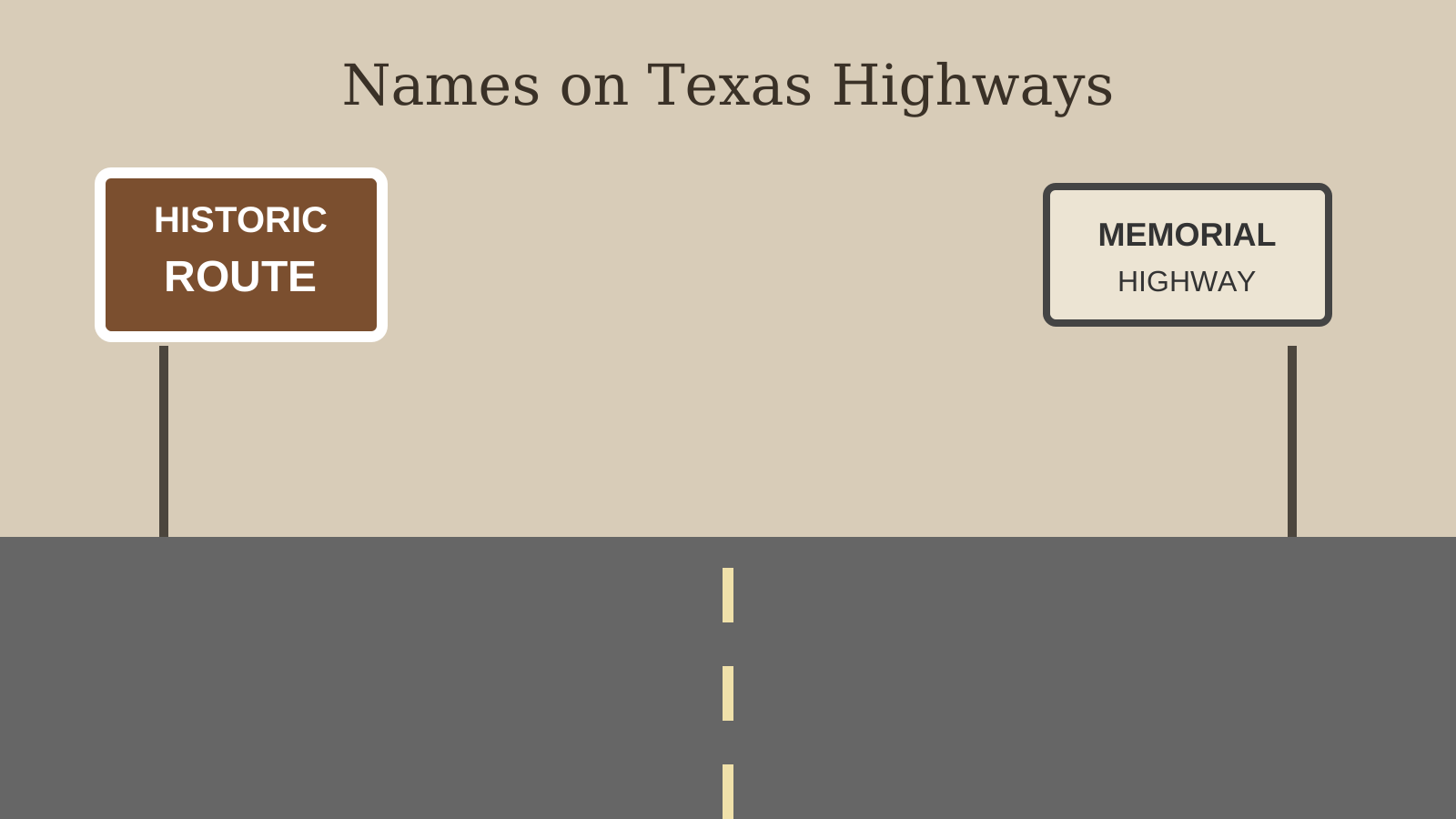
The TxDOT manual specifies reflective historic-route signs with a brown background, white border and white lettering. They are mounted separately from ordinary traffic-control signs. That visual separation reinforces the distinction between heritage interpretation and the highway's operational route identity.
Historic signs cannot simply be placed anywhere
TxDOT districts and counties follow agreements and sign-location rules. The manual says historic-route signs are not installed on access-controlled facilities, although they may be placed on frontage roads. The program is therefore a regulated heritage-signing system, not an informal local naming exercise.
Why one road can have several names
A corridor may carry a route number for navigation, a memorial designation for commemoration and a historical-route identity for interpretation. Mapping apps and local speech may emphasize one name while TxDOT signs emphasize another. None of that necessarily means the highway itself has been redesignated.
How to decode the names
- Start with the numbered route shield to identify the transportation system.
- Treat most memorial-highway names as honorary overlays on that numbered route.
- Treat brown historic-route signs as heritage interpretation authorized through a separate process.
- Remember that OSR and NASA Road 1 are unusual because TxDOT recognizes them as named highway designations.
- Do not assume a local or memorial name changes who maintains the road or what route number it carries.
A road can carry transportation and memory at once
Texas highway names make more sense once the layers are separated. The route number tells you how the road fits into the transportation network. Memorial names tell you whom a community or legislature chose to honor. Historic-route signs tell you that the corridor has recognized heritage significance. One pavement surface can legitimately carry all three stories.
Primary source: Texas Department of Transportation ↗
Filed under
- Texas historic routes
- memorial highways
- Texas highway names
- TxDOT
- Texas Historical Commission
- Old San Antonio Road
From the magazine