Texas Explained
Texas Business Routes Explained: Why the Old Highway Still Runs Through Town
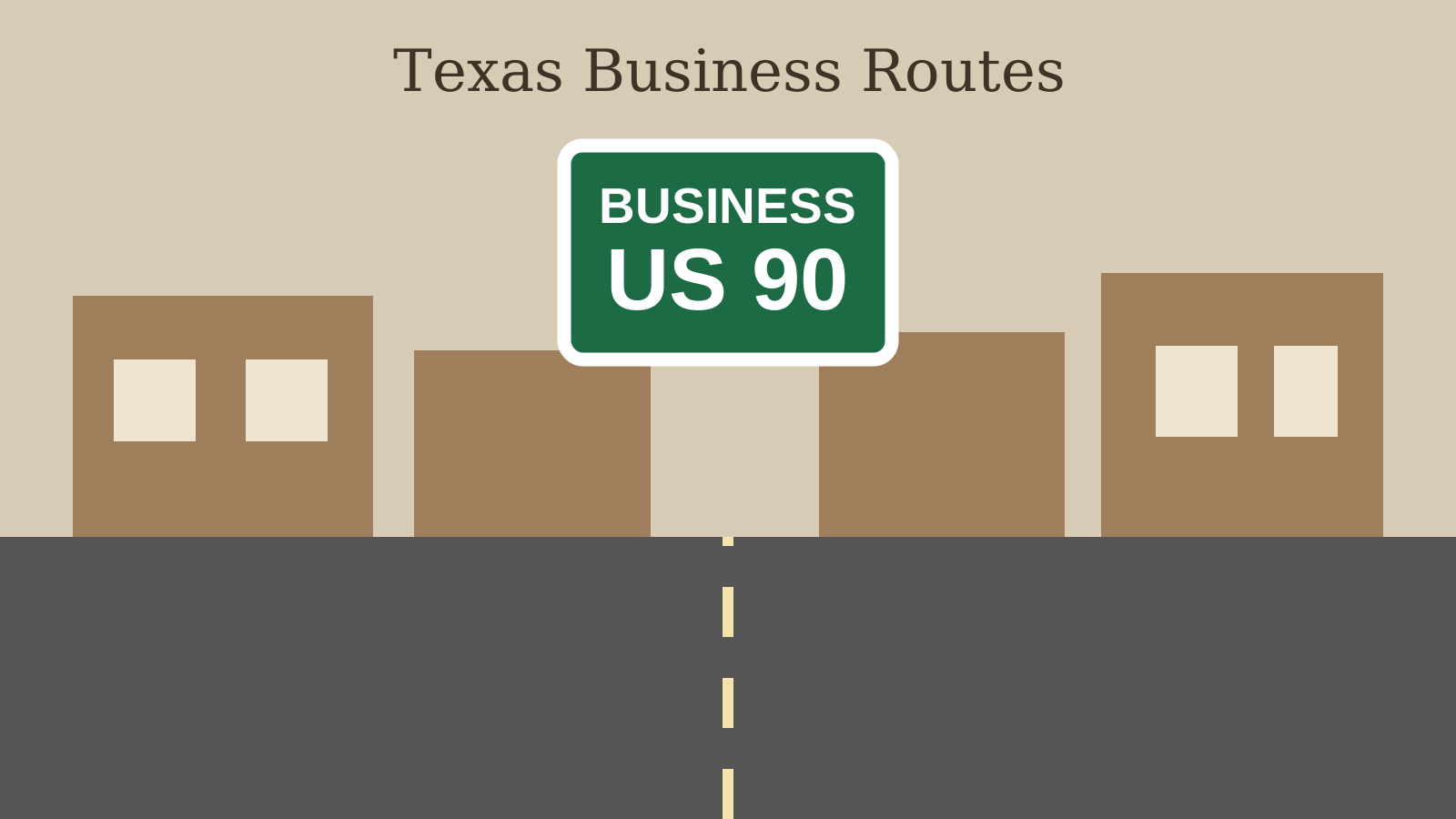
When a through highway bypasses a town, the older route may remain on the state system as a business route. Texas has business versions of Interstate, U.S., State and Farm-to-Market highways, each connecting local streets back to the main route.
A business route is one of the clearest places where transportation history remains visible in a Texas town. The fast through highway may now bypass downtown, but an older alignment can survive as a signed state route that still carries drivers past local businesses, civic buildings and older neighborhoods.
What makes a route a business route
TxDOT defines business routes by their relationship to a parent through highway. Business Interstate, Business U.S., Business State Highway and Business Farm-to-Market routes are roadways that begin and end on the corresponding through route and are designated through the Texas transportation process.
Why bypasses create business routes
When a new highway alignment moves through traffic around a town, the old path does not necessarily stop mattering. It may still be the direct route to downtown, local commerce or established neighborhoods. Keeping it as a business route preserves its connection to the parent highway while distinguishing it from the faster through alignment.
Business does not mean privately operated
The word business describes the route's local-service role, not its ownership. A business route is still a public roadway. In Texas it can remain part of the state highway system even when it functions like a city main street for much of its length.
Texas has several business-route families
The abbreviations vary with the parent system. TxDOT's glossary lists Business Interstate, Business U.S., Business State Highway and Business Farm-to-Market routes. The common idea is the same: the business road leaves the through route, serves the local corridor and reconnects to the through route.
Why the old highway often becomes Main Street
Before a bypass, the main highway may have been the town's busiest commercial corridor. Motels, gas stations, diners and stores clustered along it because travelers passed their doors. After traffic shifts outward, the business route can become a record of the earlier highway economy.
A business route can still be busy
Bypass does not mean abandonment. Population growth can keep or restore heavy traffic on an older route, especially when it serves schools, hospitals, retail districts or dense neighborhoods. The designation explains network role, not traffic volume.
What the shield tells you
- There is a corresponding through highway that carries the main route designation.
- The business route is intended to serve the local corridor rather than simply duplicate the through path.
- The road normally reconnects with its parent route.
- Its alignment may preserve the highway path that served the town before a bypass or relocation.
- Business routes can reveal where highway-oriented commerce used to concentrate.
The highway history still running through town
Business routes are useful Texas geography because they show where the transportation network moved. The bypass marks a newer era of through travel; the business route often preserves the older relationship between highway traffic and downtown commerce. Read together, the two routes tell the growth story of the town.
Primary source: Texas Department of Transportation ↗
Filed under
- Texas business routes
- business loop
- business highway
- Texas main street
- TxDOT
- highway bypass
From the magazine