
texas history
Texas Borderlands Historic Sites: Missions, Tejano Politics and the Rio Grande World
Connect Old Socorro Mission, Magoffin Home, Casa Navarro, Lipantitlán and Mission Dolores to the Indigenous, Spanish, Mexican, Tejano and American histories that overlap across Texas borderlands.
Texas borderlands history does not fit neatly inside the familiar sequence of Spanish mission, Mexican province, Republic and statehood. Across El Paso, San Antonio, South Texas and East Texas, Indigenous communities, Spanish institutions, Mexican political life, Tejano families, trade routes and later American expansion overlapped for generations.
The most useful way to explore that history is not as one continuous road trip—the distances are too large—but as a set of regional anchors. Old Socorro Mission and Magoffin Home explain the El Paso borderlands. Casa Navarro centers Tejano political leadership in San Antonio. Lipantitlán reveals how an Indigenous-named landscape became a Mexican military post and Texas Revolution site. Mission Dolores shows a different borderland altogether, where Spanish, French and Ais worlds met in East Texas.
How to use this guide
Think in regional pairs rather than trying to drive the entire collection. El Paso can support a dedicated mission-and-borderlands weekend. San Antonio places Casa Navarro inside a much larger Tejano and Spanish-colonial landscape. Lipantitlán works as a South Texas history stop. Mission Dolores belongs to an East Texas route along El Camino Real de los Tejas.
- El Paso Lower Valley: Old Socorro Mission, the modern mission corridor and Magoffin Home.
- San Antonio: Casa Navarro plus the city's broader Tejano and mission landscape.
- South Texas: Lipantitlán and the Nueces River region.
- East Texas: Mission Dolores and the El Camino Real corridor around San Augustine.
Old Socorro Mission — Pueblo history belongs at the beginning
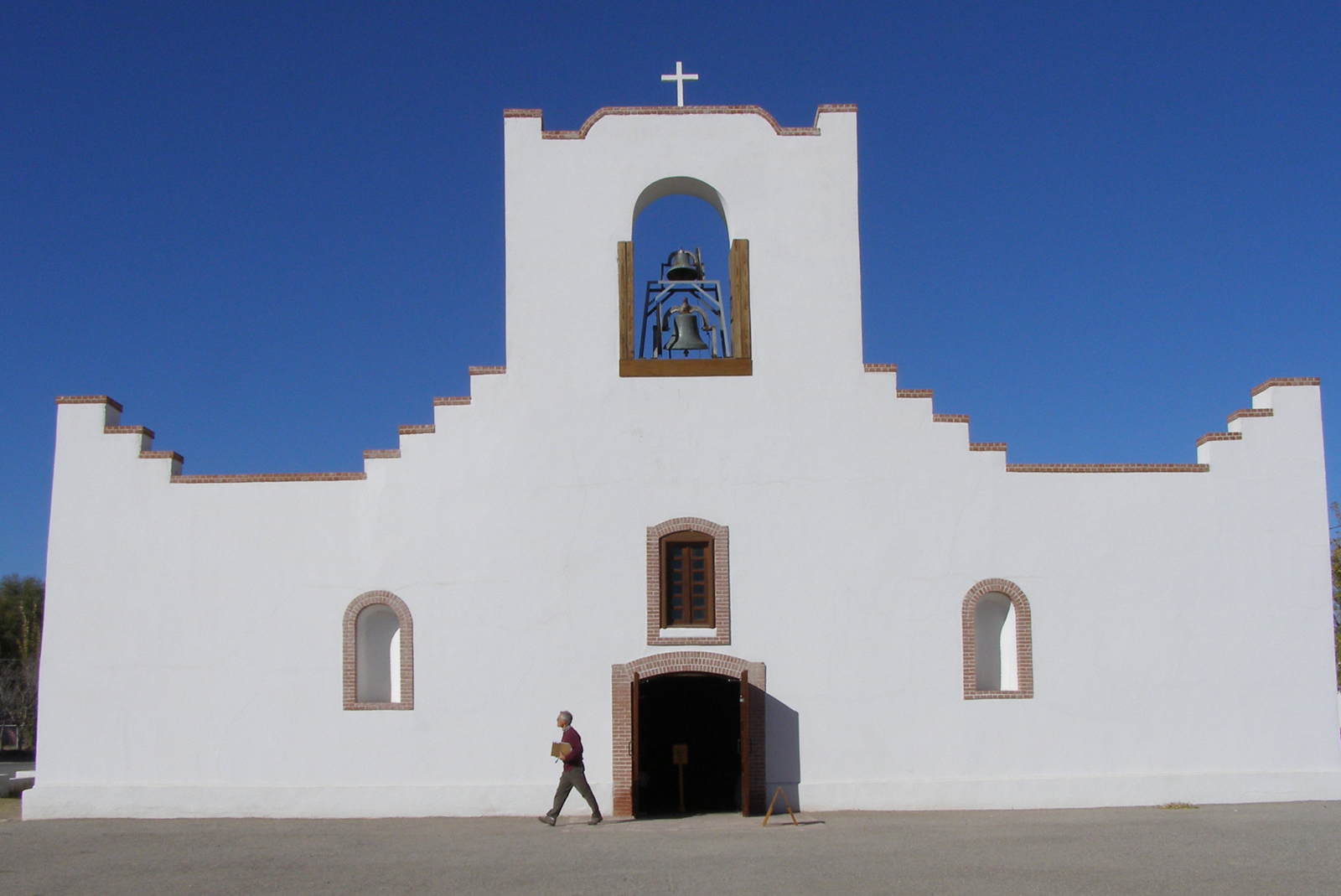
The Old Socorro Mission site reaches back to the aftermath of the Pueblo Revolt of 1680, when Spanish refugees and Indigenous Pueblo people moved south into the El Paso del Norte region. The mission community that developed there included Piro people as well as Spanish residents, and the site remained tied to the Rio Grande landscape as floods repeatedly forced rebuilding and relocation.
That history changes the usual Texas mission narrative. The El Paso missions were not simply institutions projected north from central New Spain into an empty frontier. They were shaped by displaced Pueblo communities, Spanish colonial authority, river geography and the long-lived settlements that grew around them.
Today the original Old Socorro Mission site is closed to the public, so use its historic-site page and the surviving Lower Valley mission corridor as context rather than expecting a conventional museum stop. The absence of a standing original building is part of the story: archaeology, records and the relocated community preserve a landscape that the Rio Grande itself transformed.
Magoffin Home — borderlands history moves into the railroad city
Magoffin Home moves the El Paso story forward into the 19th century. The family history crosses Kentucky, Chihuahua, Matamoros, Santa Fe, El Paso and the U.S.-Mexico border, reflecting how trade and kinship networks operated across political boundaries that later maps can make look more rigid than they were.
The adobe house also helps explain El Paso's transition from a small frontier settlement into a railroad, customs and commercial city. Joseph Magoffin served in local political office and participated in businesses, banking, landholding and public development while the region was being integrated more tightly into U.S. transportation networks.
The Magoffin Home itself is undergoing restoration and the house is closed through 2027, while the visitor center remains open. That makes current planning especially important; use the official site before visiting and treat the surrounding historic district and borderlands context as part of the experience.
Casa Navarro — put Tejano political leadership at the center
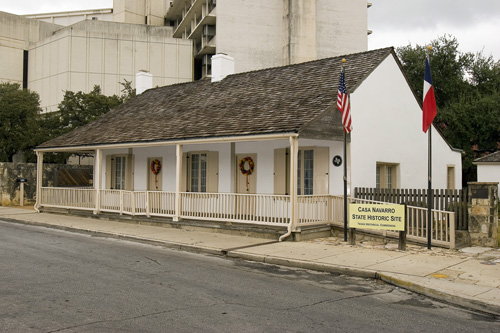
Casa Navarro is indispensable because José Antonio Navarro participated in Texas government under Mexico, the Republic and the state. He was not a marginal observer to Anglo-American political development. He was a Tejano merchant, land investor and statesman whose career crossed the constitutional transformations that defined 19th-century Texas.
Visiting the home changes the scale of political history. Instead of seeing Tejano participation as a footnote to military events around San Antonio, visitors encounter a domestic and commercial setting tied to one of the people who helped write Texas constitutions and shape public life across multiple regimes.
Lipantitlán — a historic site where the landscape is the artifact
Lipantitlán requires different expectations. The site is named for the Lipan Apache presence in the area, later became a Mexican military post, and entered the Texas Revolution story when Texian forces captured the fort in 1835. The fort was never a massive stone complex; historical interpretation describes an earthen enclosure with unfinished barracks.
Nothing resembling a reconstructed fort stands there today. The Texas Historical Commission notes that the site has no interpretation beyond the historical marker and no visitor services. That does not make the place historically empty. It means the work of visiting is to read the marker, the road network and the Nueces-country landscape while understanding that the physical fort disappeared long ago.
This is exactly the kind of site where a map and timeline should come before the drive. The value is not architectural spectacle. It is the overlap of Indigenous naming, Mexican military policy, regional settlement and revolutionary conflict in one understated South Texas place.
Mission Dolores — another borderland, another kind of archaeology
Mission Dolores in San Augustine shifts the borderlands story hundreds of miles east. Built in 1721 along El Camino Real de los Tejas, the mission existed near the boundary between Spanish and French imperial influence and depended on relationships with the local Ais people.
The site is especially useful because archaeology recovered what no longer survives above ground. Excavations identified wells, post holes, wall remnants, middens and artifacts associated with Spanish, French and Ais activity. That evidence makes Mission Dolores a good counterpoint to places where a restored building can dominate the visitor's attention.
What these sites reveal together
Placed side by side, these sites make it difficult to treat Texas history as a sequence in which one population simply replaces another. Pueblo communities continued in the El Paso region. Tejano leaders participated in multiple governments. Indigenous place names and landscapes survived political change. Spanish and French traders cooperated even when their empires competed. Families built careers across borders that later became international lines.
The borderlands approach therefore asks a different question from a conventional state-history timeline. Instead of asking only who governed Texas in a given year, it asks who lived there, which languages and trade networks connected communities, how rivers and roads shaped movement, and how people adapted when political authority changed around them.
Planning notes
- Check current THC pages before travel; Old Socorro Mission is closed to the public and Magoffin Home is under restoration through 2027.
- Treat Lipantitlán as a landscape-and-marker site, not a reconstructed fort attraction.
- Use Casa Navarro as a deliberate Tejano-history anchor within a broader San Antonio itinerary.
- At Mission Dolores, let archaeology and the El Camino Real corridor carry as much weight as architecture.
- In El Paso, connect historic sites with the Lower Valley mission corridor and the geography of the Rio Grande.
Texas borderlands history becomes clearer when the state line stops being the organizing principle. These sites show communities connected to New Mexico, Chihuahua, northern Mexico, Louisiana, Native homelands and long-distance trade routes. That wider map is not outside Texas history. It is one of the reasons Texas developed the way it did.
Image credit: Larry D. Moore · CC BY 4.0 · Wikimedia Commons
Primary source: Texas Historical Commission ↗
Filed under
- texas borderlands
- tejano history
- old socorro mission
- magoffin home
- casa navarro
- lipantitlan
- mission dolores
Plan the trip
Places connected to this story
Destinations explicitly tied to this article in the Texas Defined guide.
Socorro · El Paso County
Old Socorro Mission
The Socorro area preserves one of the oldest mission landscapes associated with Spanish colonial settlement in what is now Texas. It belongs on an El Paso Mission Trail itinerary connecting Indigenous, Spanish and Mexican history along the Rio Grande.
Best season: Year-round; spring and fall are usually the most comfortable for outdoor portions of a visit.Updated Aug 2026- Spanish missions
- El Paso Mission Trail
- borderlands
El Paso · El Paso County
Magoffin Home State Historic Site
The 1875 adobe home preserves the story of a multicultural borderlands family influential in El Paso's civic, trade and regional development. The architecture and family story provide a strong introduction to El Paso as a borderlands city shaped by overlapping Mexican, American and regional traditions.
Best season: Year-round; spring and fall are usually the most comfortable for outdoor portions of a visit.Updated Aug 2026- borderlands history
- adobe architecture
- El Paso
San Antonio · Bexar County
Casa Navarro State Historic Site
The restored home and property interpret the life of José Antonio Navarro, a Tejano statesman, signer of the Texas Declaration of Independence and influential early Texas leader. Casa Navarro adds an indispensable Tejano perspective to a San Antonio history itinerary that can otherwise lean too heavily on military sites alone.
Best season: Year-round; spring and fall are usually the most comfortable for outdoor portions of a visit.Updated Aug 2026- Tejano history
- José Antonio Navarro
- San Antonio
San Augustine · San Augustine County
Mission Dolores State Historic Site
The site interprets an early Spanish mission and the Native communities whose lives were affected by European colonization in East Texas. It broadens the mission story beyond San Antonio and places Spanish colonial expansion in the Piney Woods and Caddo homelands.
Best season: Year-round; spring and fall are usually the most comfortable for outdoor portions of a visit.Updated Aug 2026- Spanish missions
- Native Texas
- East Texas

From the magazine
More stories to read next
Then & Now
Texas National Cemeteries: Fort Sam Houston, Houston and Dallas–Fort Worth
August 21, 2026 · About 12 minutes
Then & Now
Texas Military Museums & Historic Sites: The Best Places to See the Story in Person
August 20, 2026 · About 19 minutes

.jpg%3Fwidth%3D1600)