texas history
Fort Worth Stockyards: How the Cattle Trade Built Cowtown—and How the District Survived
The Stockyards preserve the cattle, railroad and meatpacking history that made Fort Worth famous, while today’s district mixes working traditions with tourism and nightlife.
The Fort Worth Stockyards are one of the few places where Texas cattle history remains visible in the street plan, brick buildings, livestock facilities and daily rituals of a living entertainment district. Fort Worth became a major cattle center because geography, railroads and industry converged there after the Civil War. The Stockyards later declined as trucking and changes in meatpacking reshaped the business, but preservation and tourism gave the district a second life.
Why Fort Worth became Cowtown
Cattle driven north from Texas ranches followed trails that brought herds through or near Fort Worth on the way to railheads farther north. The city’s position on the Chisholm Trail era helped establish its reputation as a supply stop and cattle center. When railroads reached Fort Worth, the local economy gained a more permanent transportation advantage, making it possible to move livestock and meat at industrial scale.
Stockyards, packing plants and an industrial district
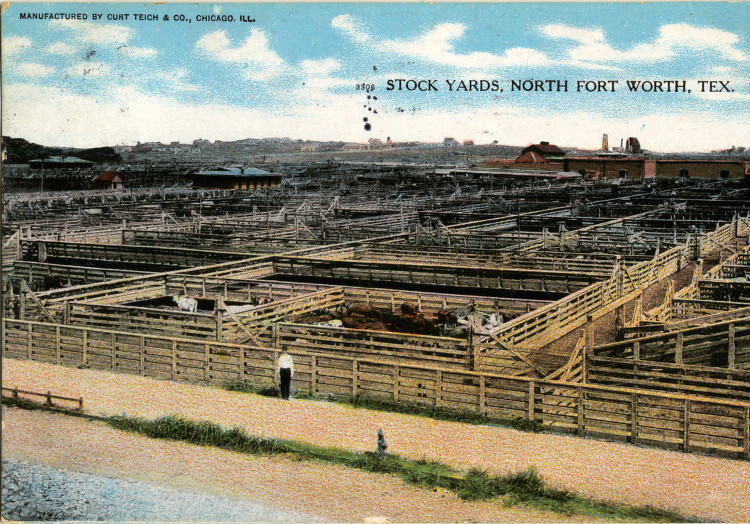
The Fort Worth Stockyards Company was organized in the late nineteenth century, and major meatpacking companies Armour and Swift opened plants nearby in the early 1900s. At its peak, the district handled huge numbers of cattle, sheep and hogs. Hotels, saloons, banks, restaurants and businesses grew around the livestock trade. The Stockyards were therefore not simply a cowboy gathering place; they were part of a modern industrial food system.
Decline after the livestock era
Changes in transportation and meat processing gradually reduced the importance of centralized urban stockyards. Trucks gave producers more flexibility, and packing patterns shifted. By the mid-twentieth century, the district’s economic role had diminished. Many American stockyard districts disappeared or were redeveloped beyond recognition. Fort Worth instead preserved enough of its historic fabric to reinterpret the area around its Western identity.
The cattle drive: tourism built on real history
Today, the twice-daily Fort Worth Herd cattle drive sends Texas Longhorns along East Exchange Avenue. It is a visitor attraction rather than a recreation of a specific nineteenth-century drive, but the animals, horsemanship and historic streets help make the older cattle economy tangible. Museums, the Livestock Exchange Building, historic markers and preserved architecture add context beyond the photo opportunity.
Rodeo, music and modern Fort Worth
The modern Stockyards combine historic interpretation with restaurants, shops, live music, hotels and rodeo events. That commercial mix can feel theatrical, but it is also why the district remains active rather than frozen as an outdoor museum. The key for visitors is to distinguish the surviving history from the later Western-themed entertainment and enjoy both on their own terms.
How to make the Stockyards part of a deeper Fort Worth trip
A strong Fort Worth itinerary pairs the Stockyards with the city’s museums, downtown, the Cultural District and local food. The Stockyards also connect naturally to Texas ranching guides, King Ranch history, high school football, rodeo culture and road trips across North Texas. The district is famous because it looks like the Texas many visitors imagine—but its real story is richer, rooted in railroads, labor, livestock markets and the transformation of a frontier town into a major city.
Why this story still matters
The Stockyards make more sense as an industrial district than as a stage set for modern Western entertainment. City preservation material and the Handbook of Texas trace a place shaped by livestock markets, rail access, meatpacking, pens, exchanges, hotels, and businesses that grew around the cattle trade. Those functions explain why the surviving buildings matter: they are physical evidence of the systems that moved animals, money, workers, and travelers through Fort Worth. Today’s restaurants, shops, events, and cattle-drive demonstrations keep the district active, but they sit on top of that economic history rather than replacing it. Understanding the earlier working landscape also helps visitors read the architecture differently. A brick commercial building, livestock facility, rail corridor, or hotel can be part of the same story about how Fort Worth earned its cattle-city identity. The district’s cultural power comes from that continuity between real commerce, preserved fabric, and modern interpretation.
Sources and further reading
- City of Fort Worth — Stockyards Historic District: https://www.fortworthtexas.gov/departments/development-services/historic-preservation/historic-stockyards
- Handbook of Texas — Fort Worth Stockyards: https://www.tshaonline.org/handbook/entries/fort-worth-stockyards
Image credit: Courtesy of Special Collections, University of Houston Libraries · Public domain · Wikimedia Commons
Primary source: Texas State Historical Association ↗
Filed under
- Fort Worth Stockyards
- Fort Worth
- Texas cattle drives
- Cowtown
- Texas history
From the magazine
More stories to read next
Then & Now
Texas National Cemeteries: Fort Sam Houston, Houston and Dallas–Fort Worth
August 21, 2026 · About 12 minutes
Then & Now
Texas Military Museums & Historic Sites: The Best Places to See the Story in Person
August 20, 2026 · About 19 minutes

.jpg%3Fwidth%3D1600)